

My favorite portable hi-fi accessory is back, but I think it’s missed a trick — the AudioQuest DragonFly DAC was my go-to for great-sounding music on the go, and I heard the new version in action, but it's made one key upgrade mistake
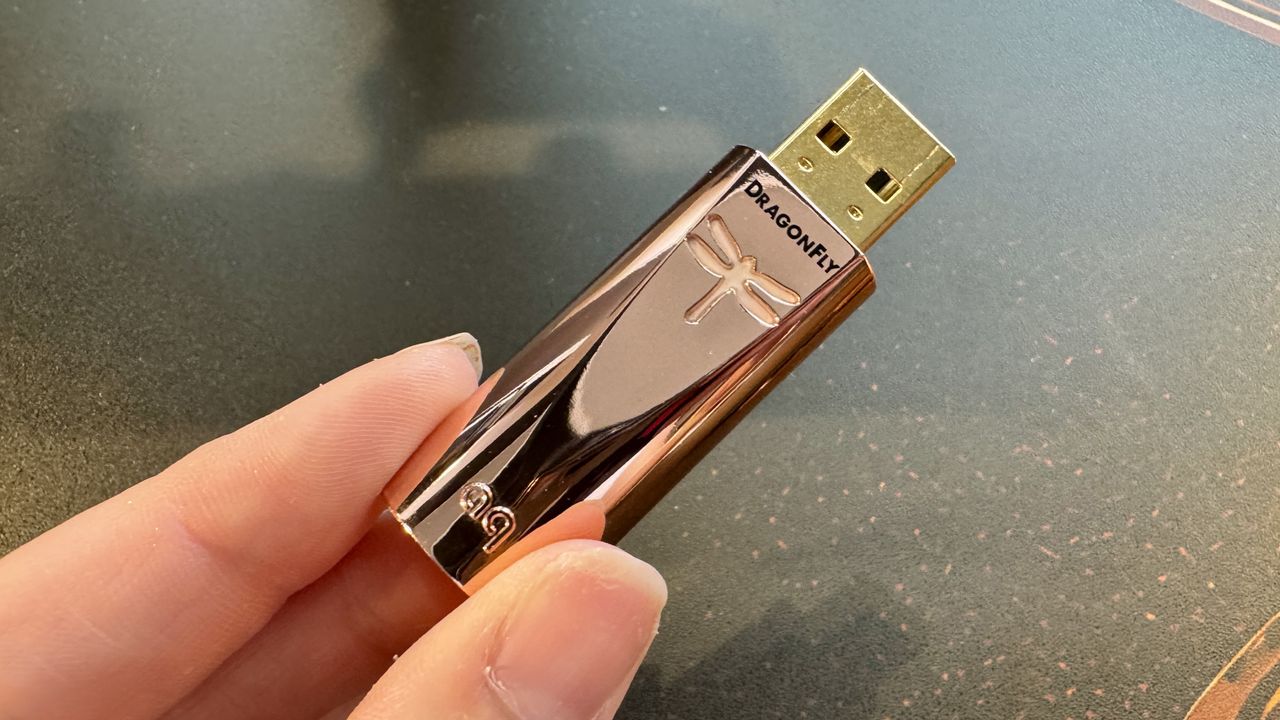
Not that long ago, I stumbled across my old AudioQuest DragonFly Red USB DAC when rearranging a work cupboard. Its paintwork might have seen better days, but its simple form factor took me back to a really exciting time in hi-fi — when more people were starting to care what their music sounded like again, and making better sound more portable was an important part of that.
The DragonFly line was really quite revolutionary among the best DACs of the time for that reason, and was an education piece as much as anything else. For so long, most people had accepted that the sound from their laptops and portable devices just was whatever it was — but the DragonFly, with its unintimidating, recognizable form factor, helped demonstrate the impact of dedicated audio electronics to a wider audience.
Plus it was just so convenient. I would wager I had one DragonFly model or another plugged into my laptop for most of the years between 2012 and 2018.
Its last model, the DragonFly Cobalt, was released in 2019, but it was eventually discontinued last year due to a rise in costs due to unpredictable US tariffs. Now, with a rethink on materials and supply chains, it’s back with a new version — and AudioQuest is promising the new DragonFly Copper is its most powerful and efficient DAC yet.
That’s because the new 32-bit ESS Sabre ES9218 DAC its outfitted with claims twice the output power of any DragonFly before it, but with a smaller processor that has helped reduce power consumption by a quarter. The new copper case, which AudioQuest says has been “informed and inspired” by the RF-draining barrels of its premium Mythical Creatures cabling, also adds to its improved performance, helping to minimize noise.
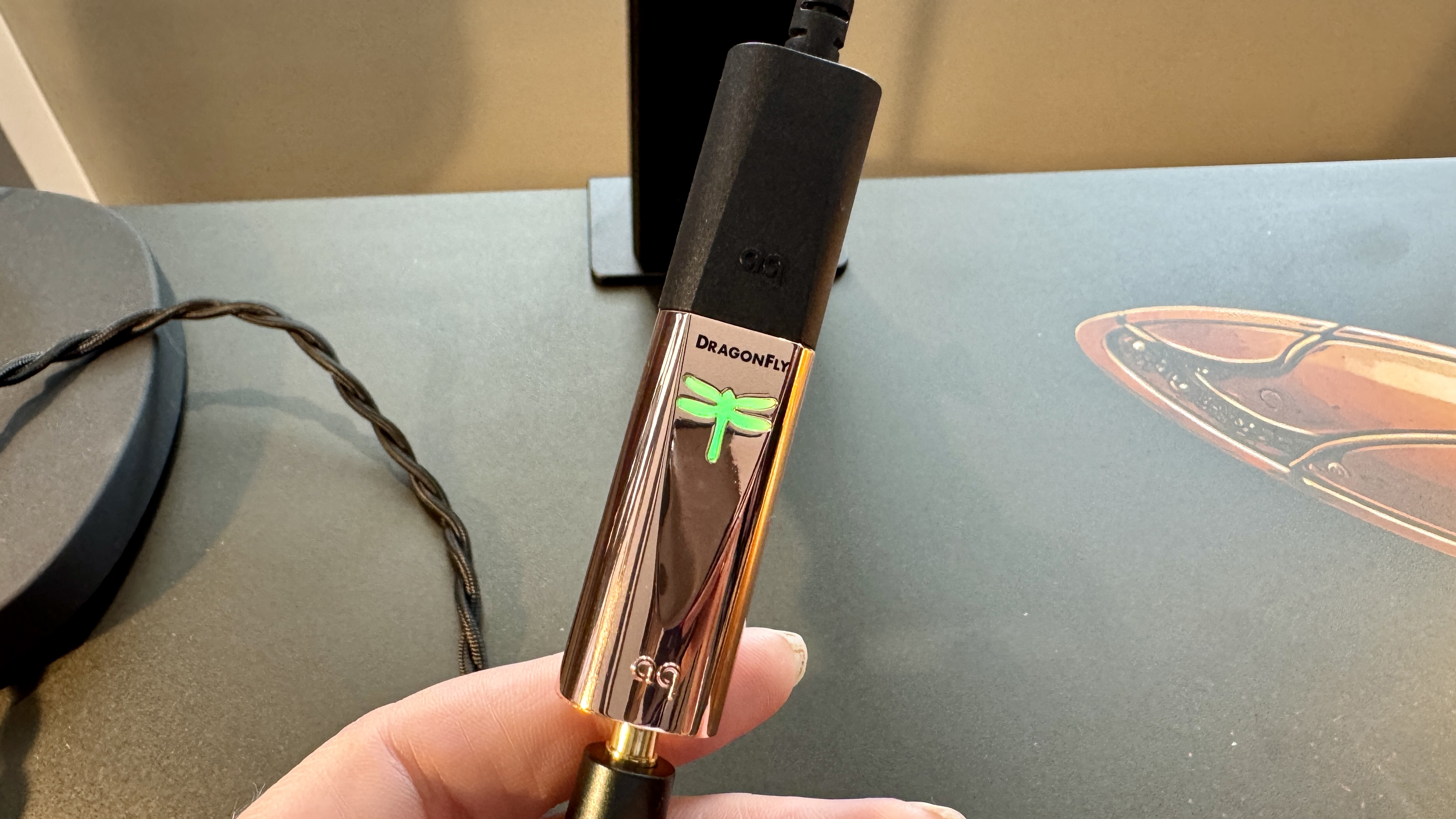
It also looks pretty nice, which is a bonus, and it still has the little light-up dragonfly to let you know the sample rate you’re listening to, from green at 44.1kHz, blue at 48kHz, yellow at 88.2kHz and light blue for 96kHz.
Long-time DragonFly designer Gordon Rankin is behind the tuning of this generation too, and AudioQuest says he has optimized it in a way that reduces distortion to a level “significantly below” that of previous models.
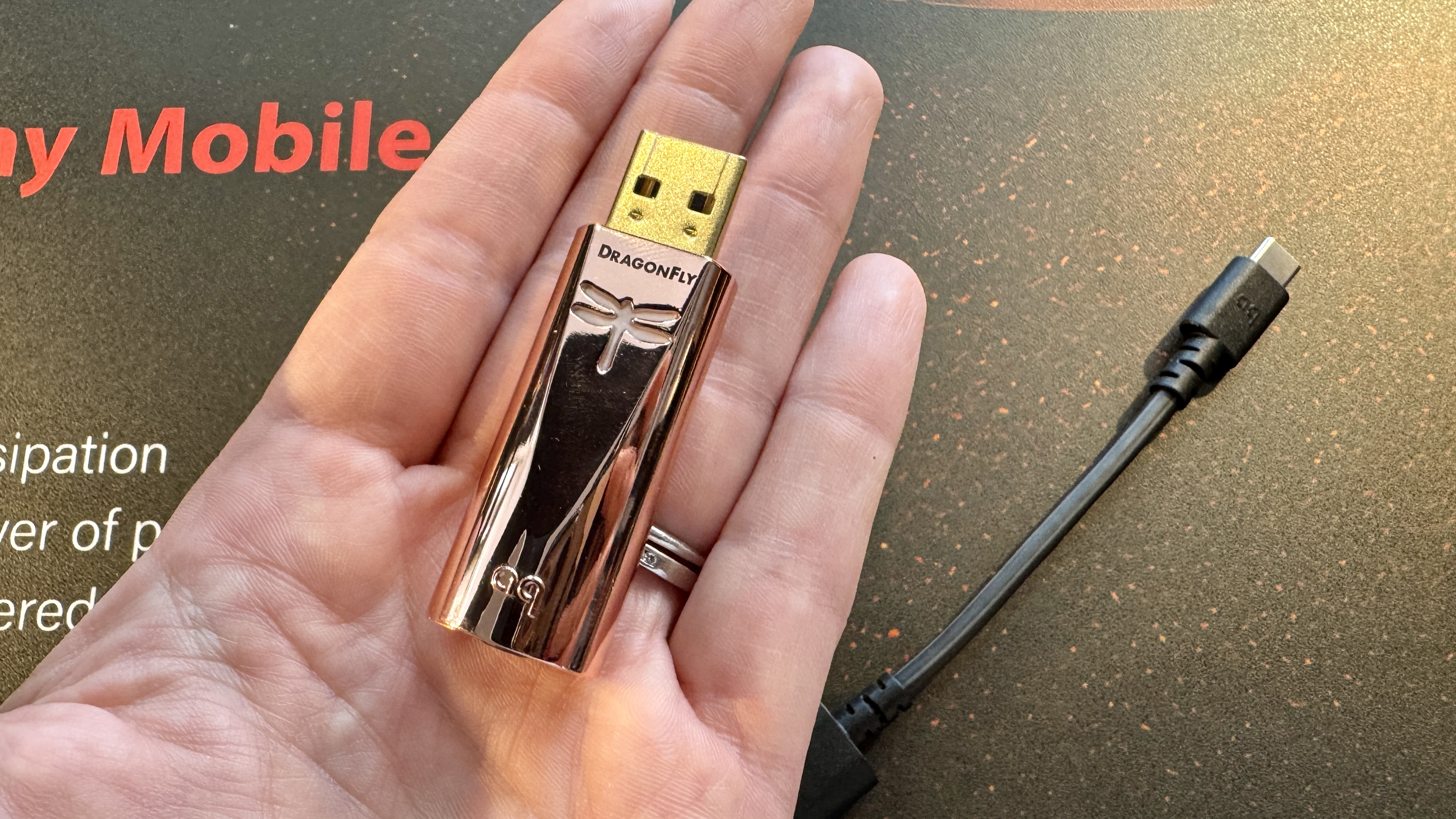
The one thing that AudioQuest hasn’t updated, though, is the need for the DragonTail USB-C converter, because the DragonFly itself is still rocking an older style USB-A connector.
While this was super-convenient for my laptop in 2015, my laptop is all USB-C now (along with my phone, and most of the rest of my life), and so some of that once-effortless form factor feels lost in 2026 (particularly because my personal chance of misplacing this necessary dongle is almost devastatingly high).
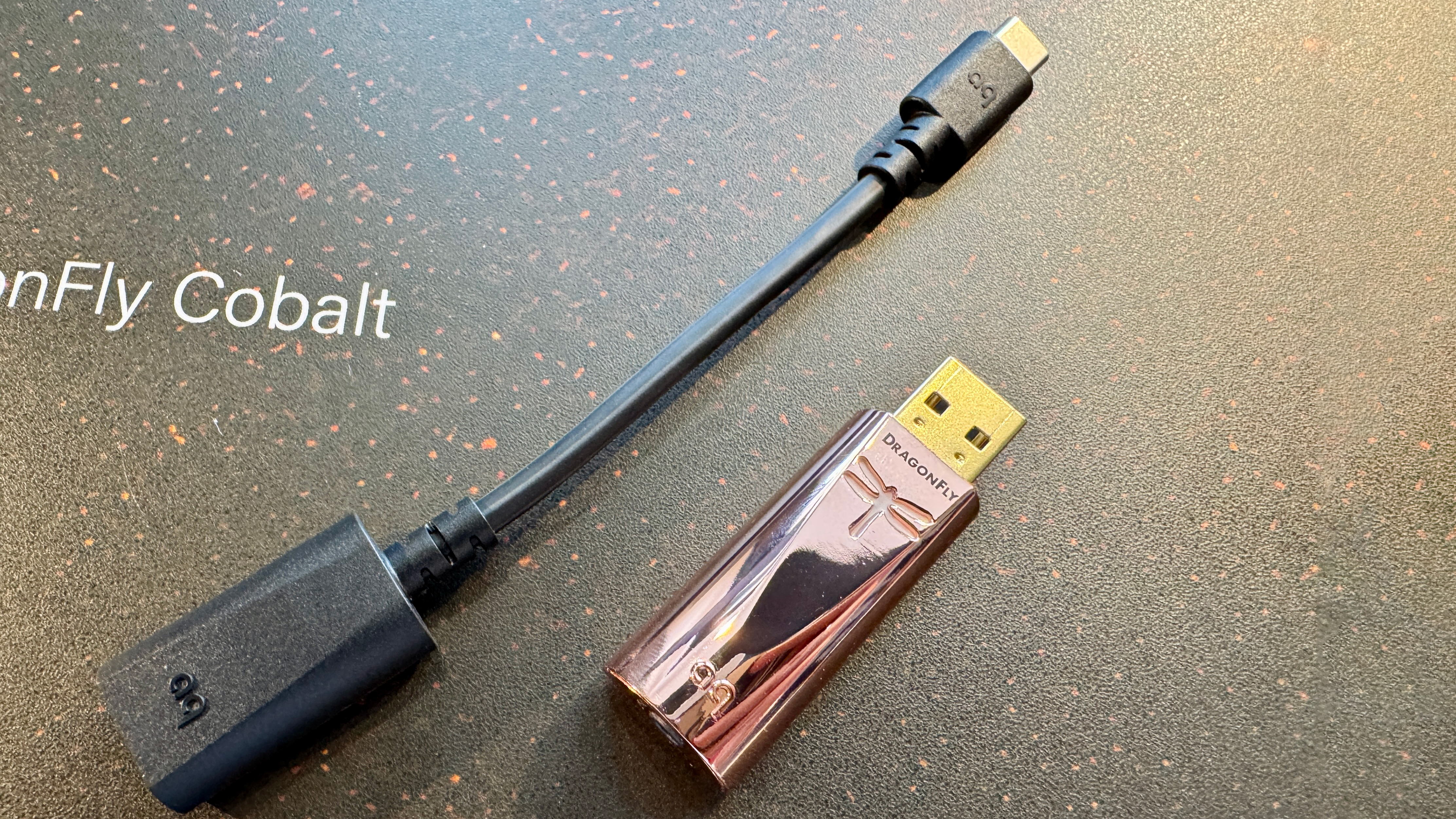
AudioQuest isn’t alone here — several USB DACs on the market rely on a similarly clunky addition — but there are tons of USB-C options, and it feels like an obvious problem for the DragonFly to solve.
I asked whether it had been considered, and while I wasn’t given a firm answer, it was suggested that the smaller connector wouldn’t be great for stability and longevity, but also that maintaining USB-A also gives it greater flexibility to use with as many devices as possible.
As for how it sounds, from a first listen, it’s as promising as ever. Although I wasn’t able to do any A/B testing due to the demo using an iPad with no 3.5mm jack, listening with a pair of Austrian Audio’s The Arranger through the DragonFly Copper sounds incredibly clean and precise.
Now, these $1,100 / £900 / AU$1,759 open-back headphones are undoubtedly not-to-shabby on their own, but even if we credit them with a good chunk of the space and airiness I hear on a listen of Come Away With Me by Norah Jones, I’m certain that the amount of clarity and insight is very much aided by the DragonFly.
Jones’ breathy voice is sweet and full of texture, as are the instruments — the DragonFly’s fine detail retrieval able to fully enunciate the leading edges of notes all the way through to their decay in a way that I’m confident you just wouldn’t hear without it.
Of course, the DragonFly Copper re-enters a market that is very different today, with more wireless headphones and much more competition in the affordable USB DAC market too. But talking to people in the hi-fi world, there’s a clear excitement for the DragonFly’s return, and I think that extends to more than just nostalgia.
I’m certainly excited to spend more time with it when it goes on sale in September for $250 / £230 (about AU$430 but there’s no confirmed Australian price as yet).
This is a preview from the original publisher. Continue reading at the source:
Read Full Article on techradar.com →