

I tested the Edifier MR5 — and they’re budget-friendly studio monitors with energy and clarity
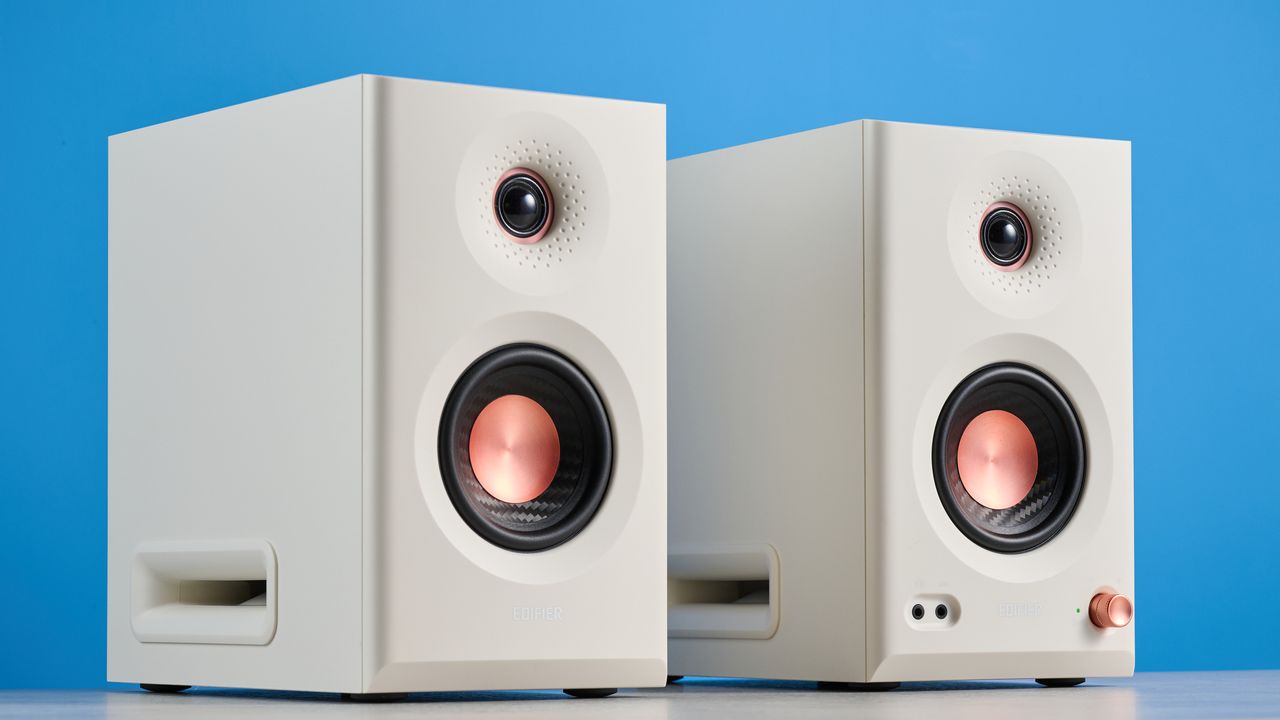
The Edifier MR5 are some of the best budget-friendly studio monitors I’ve ever tested, and certainly some of the best speakers you can buy these days. Although they’re not quite as precise as pricier alternatives — think the Cambridge L/R S ($459) or Dali Kupid ($600), they’re excellent for well under $400.
With a veritable feast of connectivity types — we’re talking Aux, RCA, TRS, XLR, and Bluetooth — and a litany of customization options in the Edifier ConneX app, these monitors will be great for any content creator, music producer, or even casual listener. Heavier music fans might be better with the much cheaper Edifier R1280T or the Edifier S880DB MKII, but acoustic, pop, and electronic fans need look no further.
So, are the Edifier MR5 worth their salt, or can you find better seasoning elsewhere? Short answer: worth it. But to find out the full story, keep reading this Edifier MR5 review.
Edifier MR5 review: Specs
|
Price |
|
|
Connectivity |
Bluetooth, AUX, RCA, TRS, XLR |
|
Frequency response rate |
46Hz - 40,000 |
|
Subwoofer out |
No |
|
Weight |
22.9 pounds |
|
Dimensions |
11 x 6.3 x 10.4 inches |
|
Colors |
Black, white |
Edifier MR5 review: Price & availability
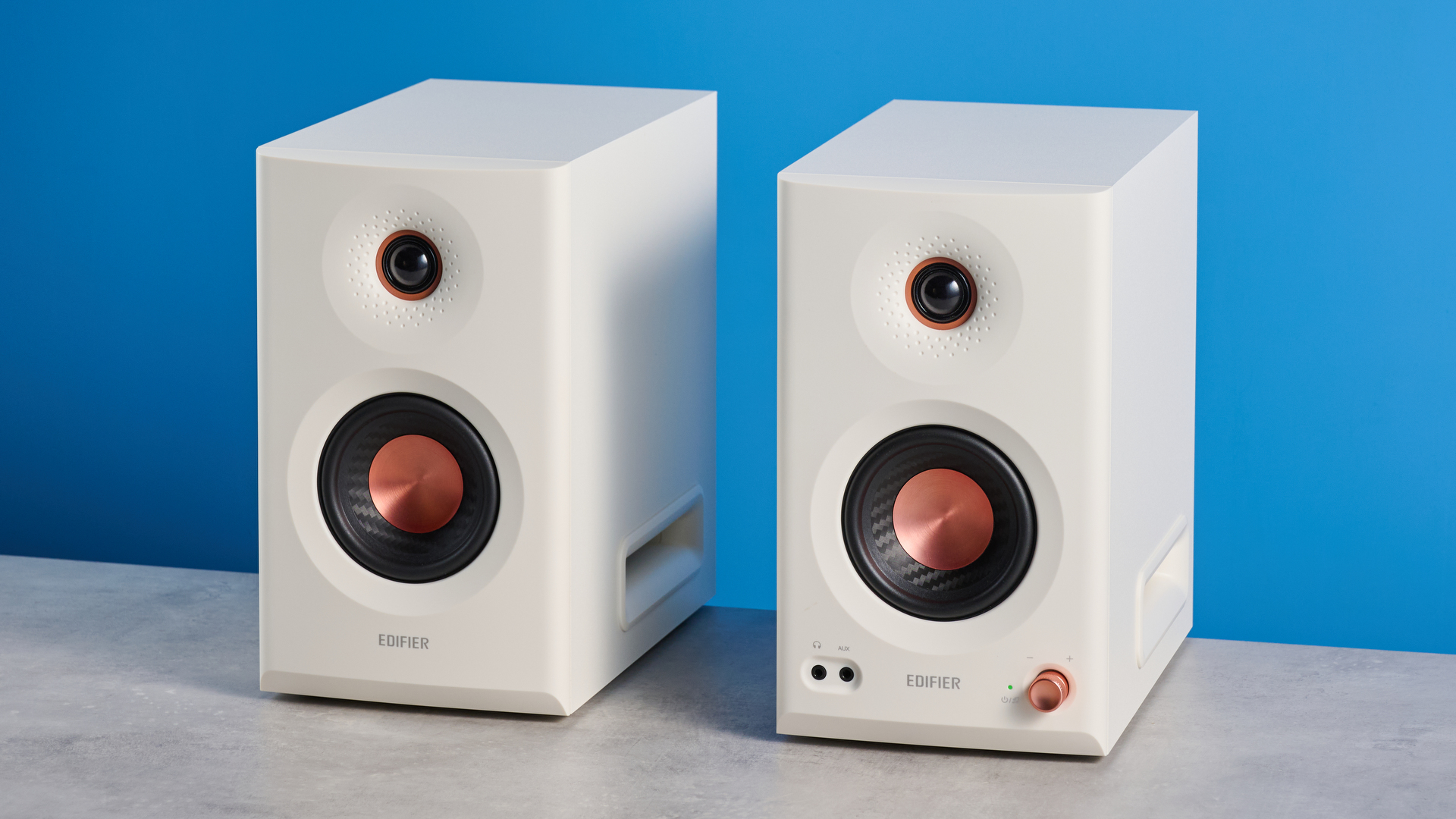
The Edifier MR5 are $349 from Amazon U.S. and £279 from Amazon U.K. This makes them considerably more expensive than the Edifier R1280T ($149), my personal turntable speakers, and the Edifier M60 ($199). If you’re on a budget, I’d recommend getting one of those speakers instead — they’re cheaper, but still sound awesome. That’s not to say the MR5 aren’t worth it — they are — but every penny helps, right?
I’ve also tested the mid-range Cambridge L/R S ($549) and the premium-on-a-budget Edifier S880DB MKII ($449), both of which are your more punchy, louder speakers rather than the accurate studio-monitor-sound-profile of the MR5.
Edifier MR5 review: Design
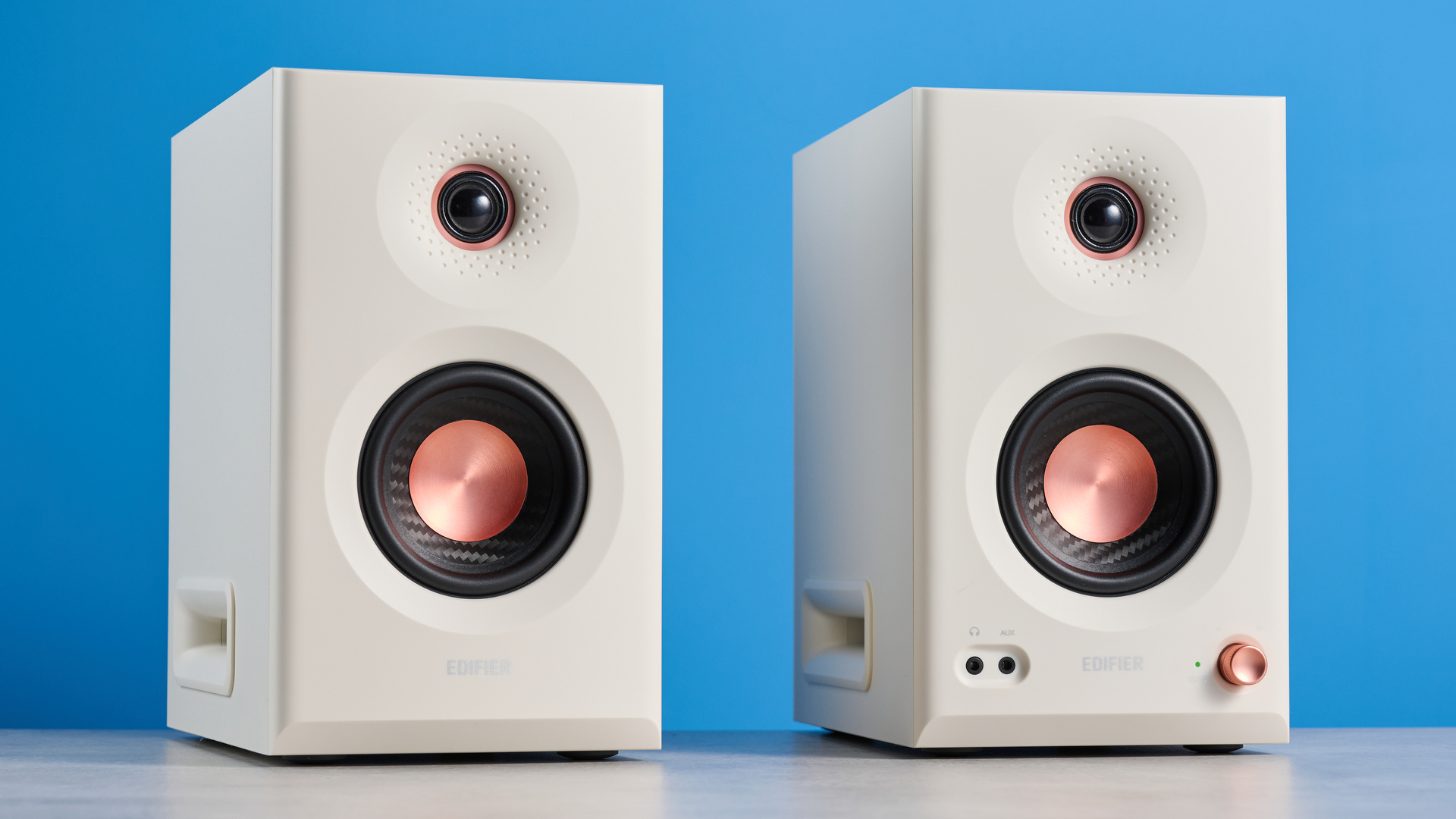
The Edifier MR5 look like your standard Edifier speakers. They’re quite large, at 10 inches high, 6 inches wide, and 11 inches deep. I wouldn’t recommend them for small setups or for people who value a pretty speaker.
They don’t look as striking as the Edifier S880DB MKII, so I’d recommend those if you want an eye-catching speaker. Alternatively, I’d recommend the DALI Kupid ($600) (but you need an AVR), or the Kanto UKI ($269).
Controls
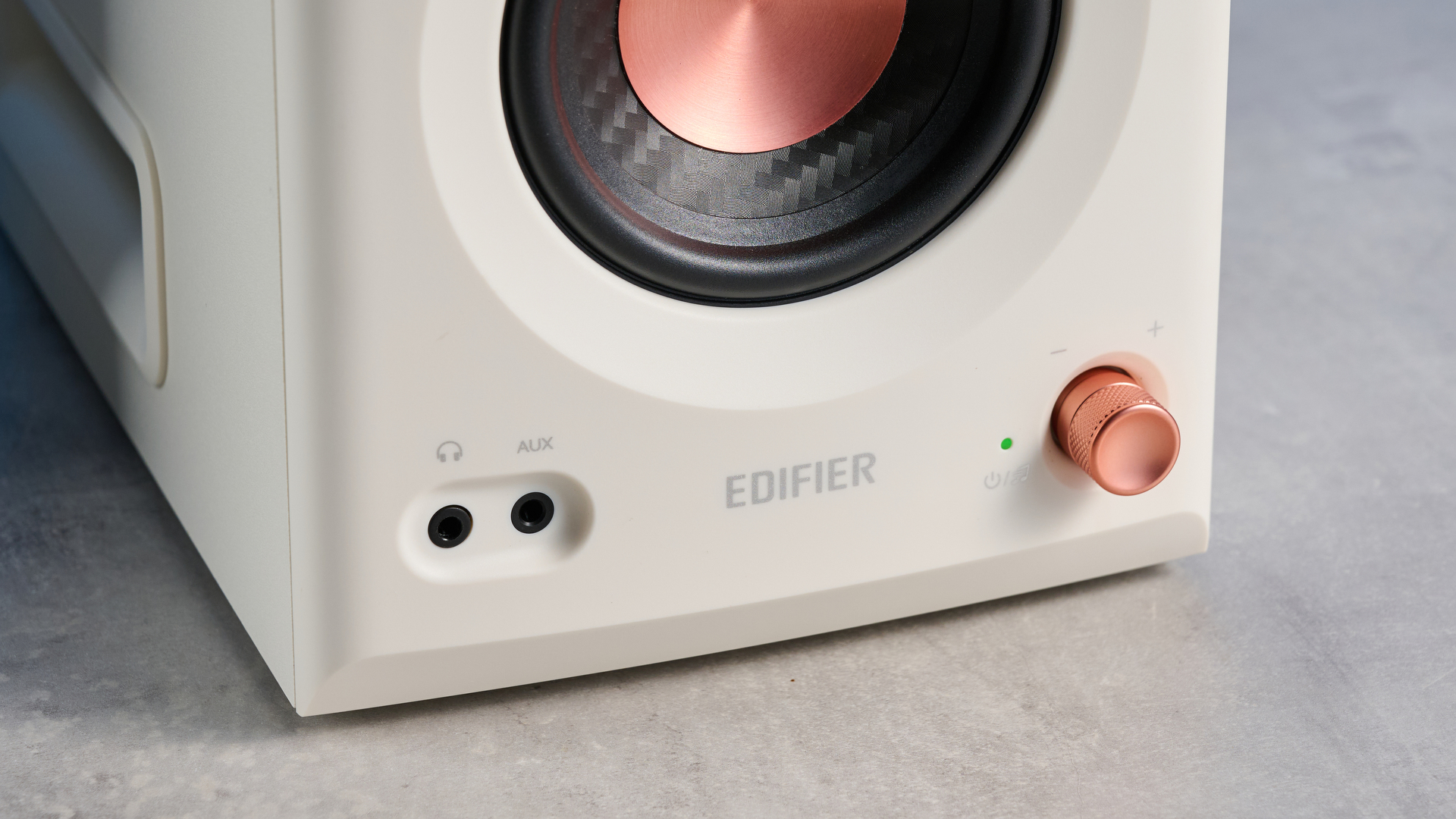
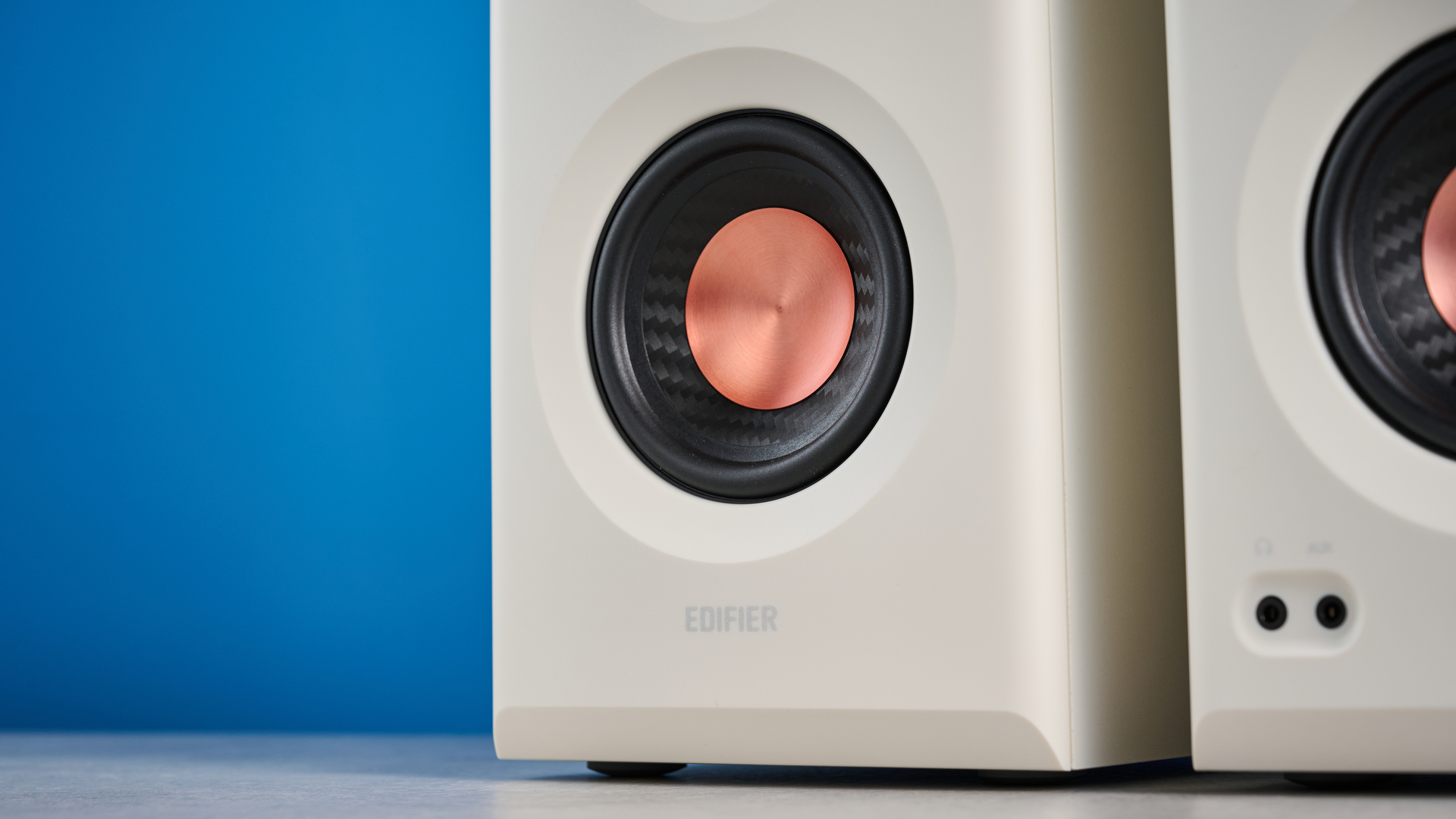
The MR5 have just one on-speaker control. You’ve got the volume dial on the front of the speaker and a headphone output. Of course, you can also control the speakers via Edifier’s ConneX app, which I’ll discuss in more detail below.
You’ve got a treble and bass (lovingly named “high” and “low”) on the back of the speaker, but I’d like to see these knobs on the front in future. It’s quite annoying to turn the speakers around just to increase bass.
Connectivity
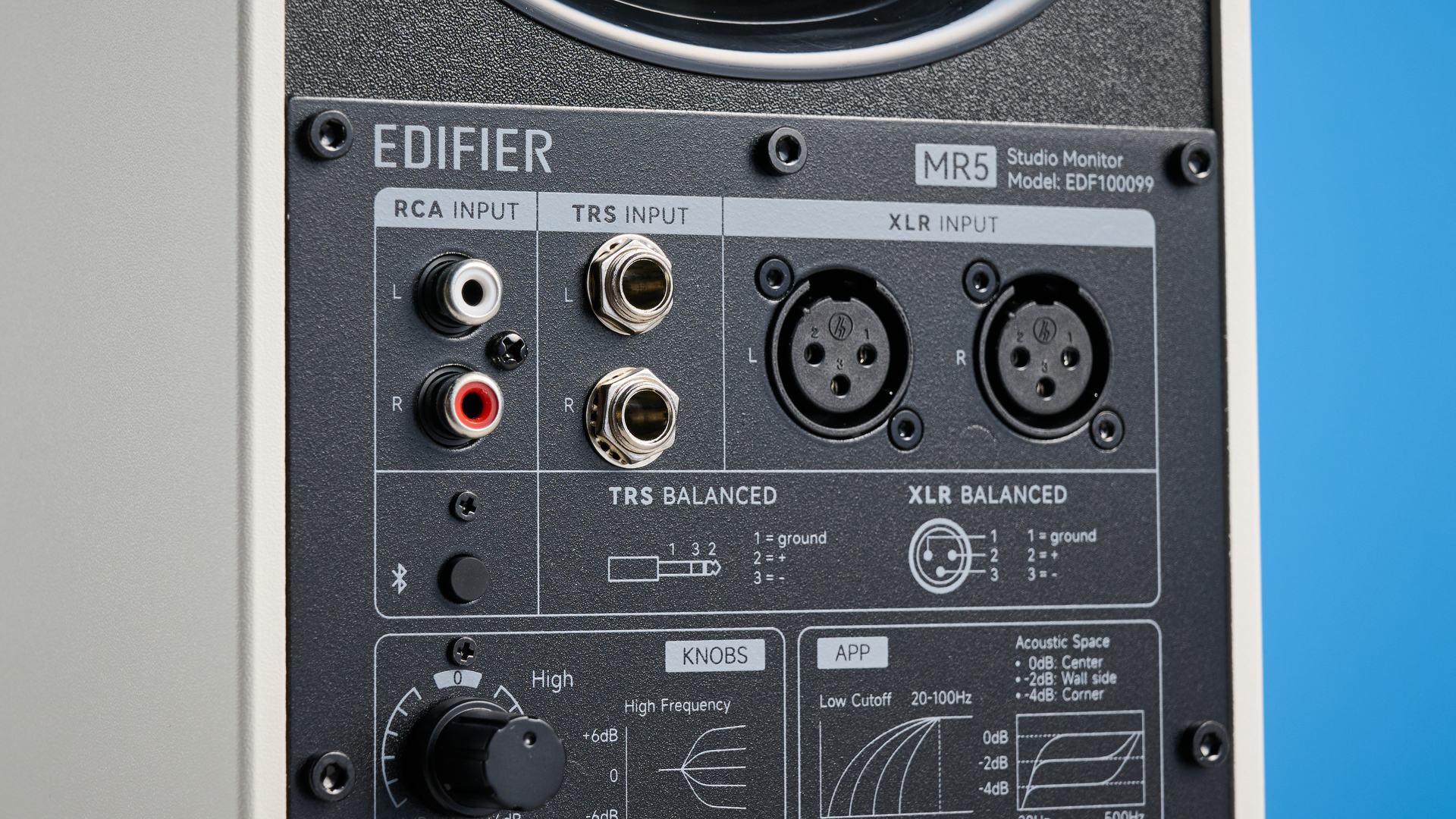
If you need studio monitors that can do it all, the MR5 might just be it. On top of the standard RCA and aux connectivity ports, the MR5 also have Bluetooth, RCA, and even XLR. This is ideal for studio musicians or home producers who need the highest possible quality. If you’re using broadcast mics, then you’ll need an XLR connection for the best quality. Unfortunately, the MR5 don’t have USB-C listening.
I found connecting to Bluetooth and Aux easy. There’s really nothing else for me to say! These speakers work as advertised.
The array of connectivity types might be a little too much for casual home listeners — in that case, I’d recommend the aforementioned R1280T.
Edifier MR5 review: App
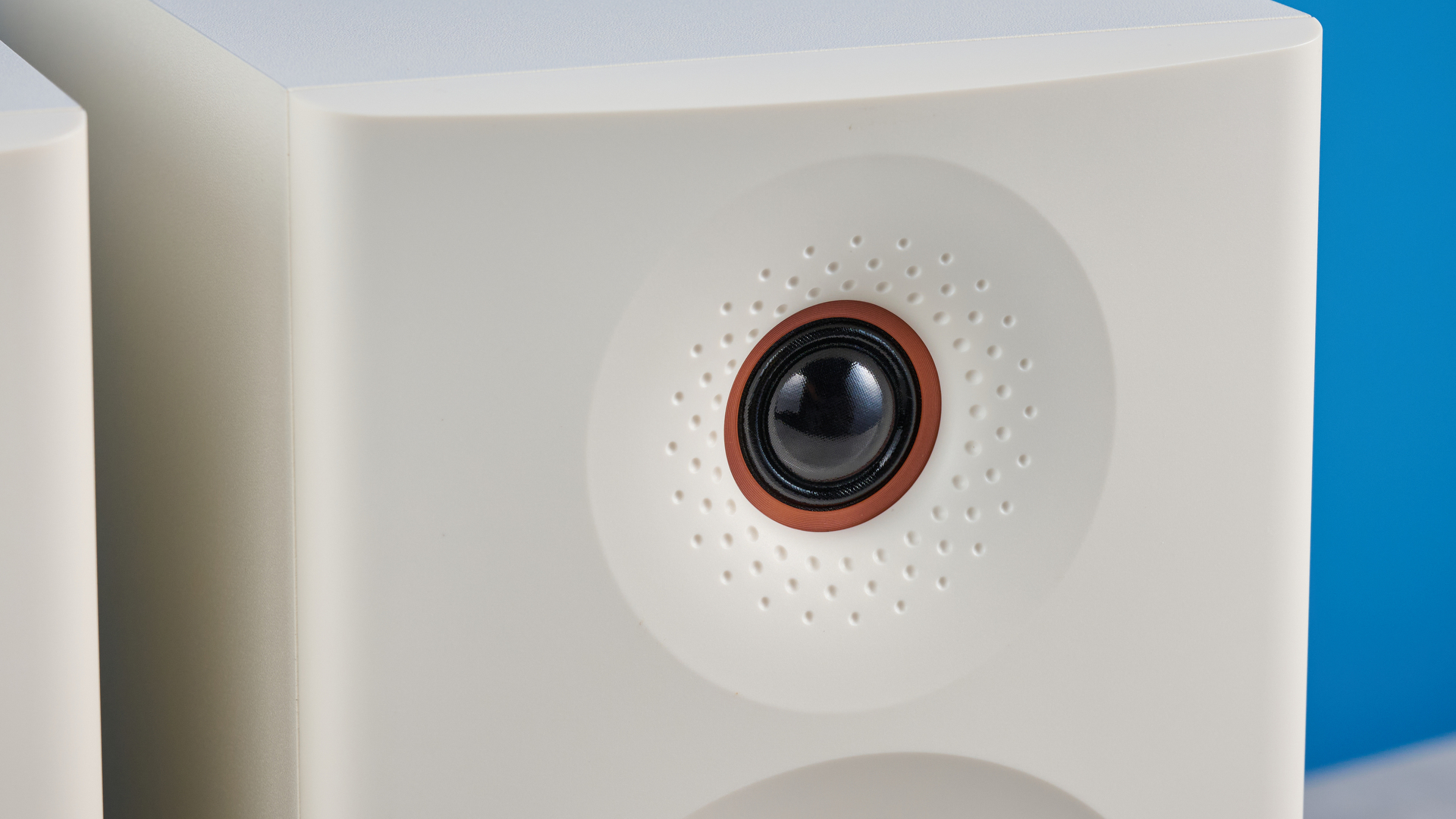
As with other Edifier products like the M60 and the S880DB MKII, the MR5 are compatible with the ConneX app. You have to connect via Bluetooth to be able to control the speakers, but the speakers should remember your settings for analog listening sessions. When I first unboxed the speakers, I had to update the firmware. This took 10 minutes, so bear in mind if you wanted to get listening straight away.
In terms of the app functions, there are actually some unique features. You can customize a 9-band EQ, choose between ‘Music’ or ‘Monitor’ EQs, and calibrate the room with the “Acoustic Space” configuration (decrease decibel level to compensate for wall placement). You can also configure desktop placement and cut-off frequencies from 20Hz to 100Hz. I didn’t notice a huge difference when I activated “Desktop control”, but “Acoustic Space” did make a difference to the bass. I kept it on 0dB.
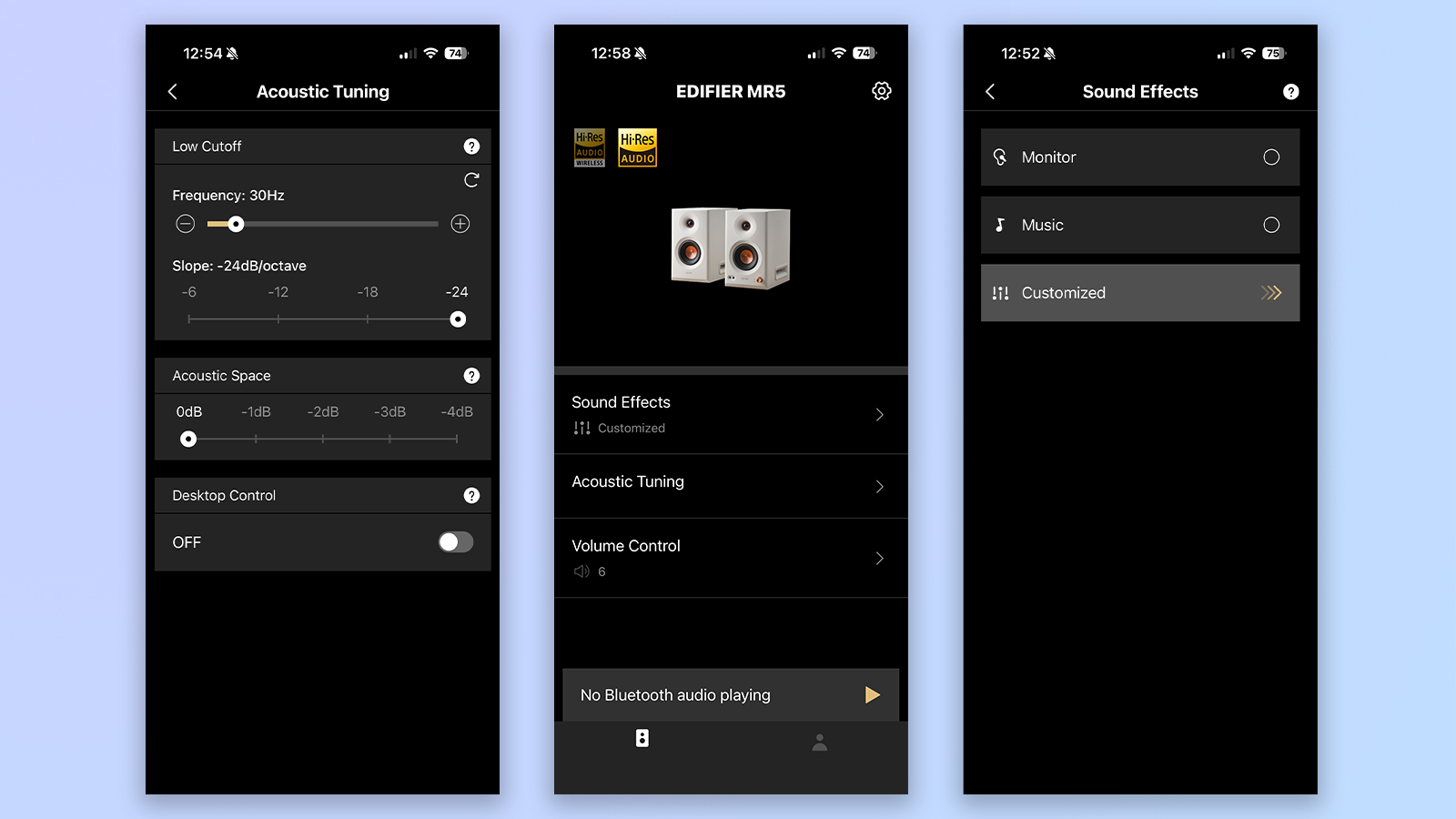
As you can see, these functions are less gimmicky than those on the S880DB MKII, so I would actually recommend downloading this app and having a play around.
Edifier MR5 review: Sound quality
To test sound quality, I listened to a variety of genres on Qobuz, our best music streaming service for audiophiles. I listened via Aux and Bluetooth. Of course, Aux provided the most “accurate” sound, but Bluetooth sounded good, too.
I played “Atomic” by Blondie via Bluetooth. The soundscape was incredibly wide. The opening guitars and synths sounded expansive and detailed, and the flitting keyboard notes darted around the guitar melody with verve. Debbie Harry’s voice sounded fantastic; clear, detailed, and sonorous. There was no pinching at the top of the treble or in the cymbals.
After, I played “The Nightlife” by Honey Dijon. This house track is built over a swallowed synth motif, which rolls across the soundscape in what sounds like a full circle. The stereo imaging on these speakers is fantastic. I could feel the synth moving from left to right, up, down, and back again without moving my head. The treble did sound a little too bright so I reduced the “high” knob, which helped.
Lastly, I played “Citizen Erased” by Muse. This episodic rock track has a duplicate guitar + bass riff, so is great for testing heavy instrument separation. The percussion sounded great, with a bright snare drum and twinkling cymbals. The sludgy guitars weren’t as separated as I’d like, but the synth alarm sounds flickered across the soundscape like fireflies. I’d get these speakers if you
Although everything sounded good, and I’d gladly use these speakers as my main speakers at home. I’d recommend these speakers more for electronic, pop, or acoustic fans than for messy guitar music.
Edifier MR5 review: Verdict
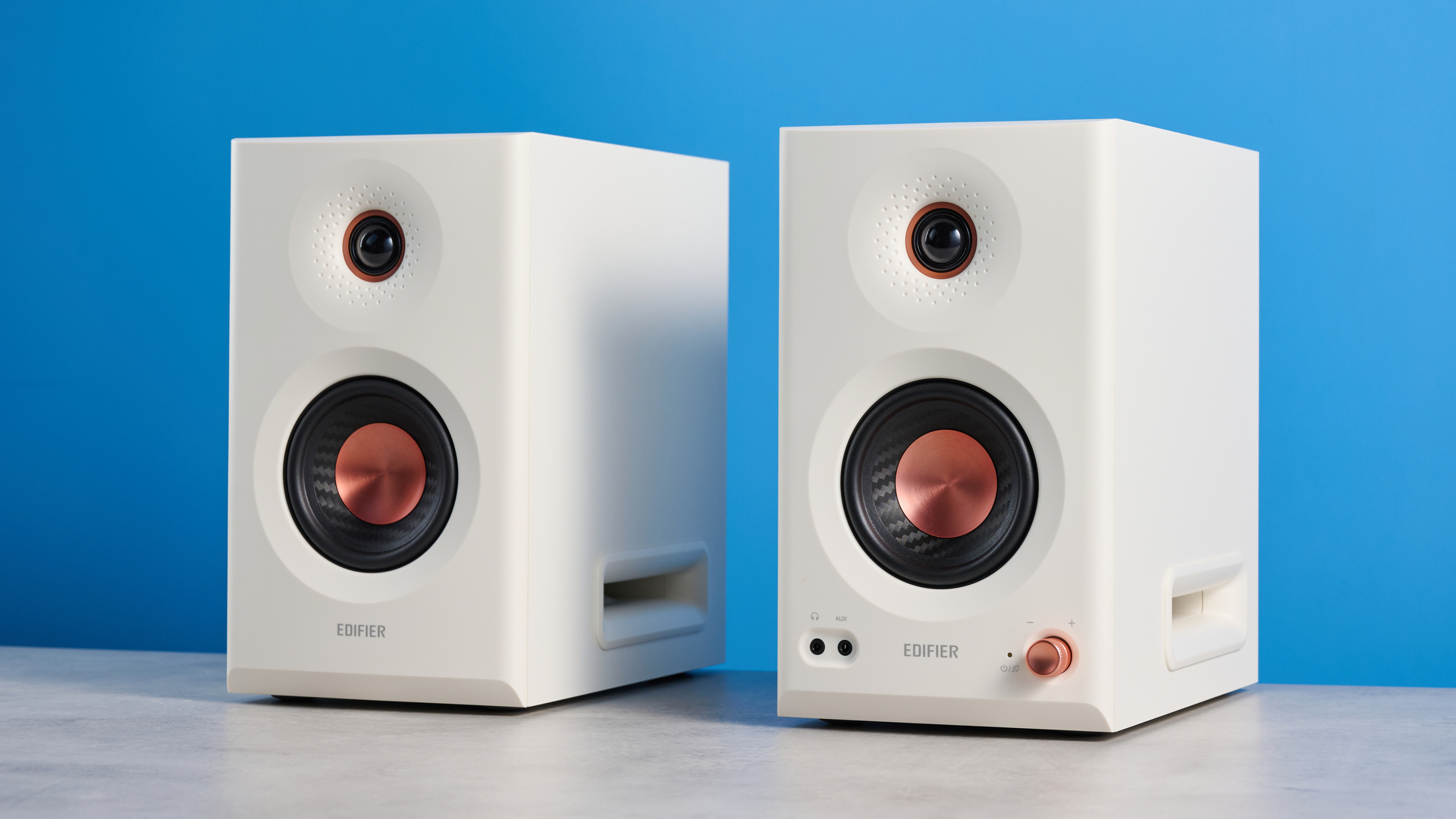
Although somewhat ugly, the Edifier MR5 are great midrange speakers with good spaciousness and clarity. On top of having fantastic sound, they also boast a veritable feast of connectivity options — XLR, RCA, TRS, Aux, and Bluetooth. Hello? Did someone say spoiled? We’re eating tonight, guys.
There’s also basic room calibration in the form of “Acoustic Space” and “Desktop Control”. Obviously, if you want true room calibration, you’ll want to check out the Dirac-powered Klipsch The Sevens II ($2,000), but this is great for $300.
Would I buy these speakers? If I had a large desk space, 100%. The sound is rich and clear, and although some heavier tracks weren’t as detailed as I’d like, for electronic, pop, and acoustic, these studio monitors are fantastic. The MR5 are another home run from Edifier. When will it end?
This is a preview from the original publisher. Continue reading at the source:
Read Full Article on tomsguide.com →