

2026 is all about plastic-free coffee makers — and I tested out Simply Good Coffee's viral Plastic-Free Brewer so you don't have to
I'm Erin, and welcome to the twelfth episode of The Coffee Lab, the series where we forget coffee snobbery. The Coffee Lab is all about making coffee fun. Join me as I help you kickstart your coffee journey!
Here at The Coffee Lab, I'm always trying to find the best coffee maker. With so many options out there now — Moccamaster, Ninja 12-Cup, Breville Luxe Brewer, Aarke Coffee Maker, Bonavita — it honestly feels like a headache just trying to remember all the brand names, let alone what makes each coffee maker unique.
Thankfully, Simply Good Coffee literally put it in the name. This week, I've got the Simply Good Coffee Plastic-Free Brewer on the dissection table, so let's get stuck in. You guys hate plastic in your coffee. Personally, I'm not vehemently anti-plastic. While I was researching for this article, I discovered that BPA plastic is not banned in the U.S., which explains a lot. European food safety standards are pretty robust already — BPA plastic has been banned in the EU since 2025. Of course, minimizing plastic usage is the best course of action for the environment as a whole, so we should all be consciously choosing the eco-friendly option.
Simply Good Coffee is trying to make one of the first "truly" plastic-free coffee makers... and it's kind of succeeded? I say "kind of", because the Plastic-Free Brewer has a plastic-coated exterior (for health and safety to prevent burns) and silicone tubing in the water lines. Are these dealbreakers for you, or would you still get the Plastic-Free Brewer? Let's get into it.
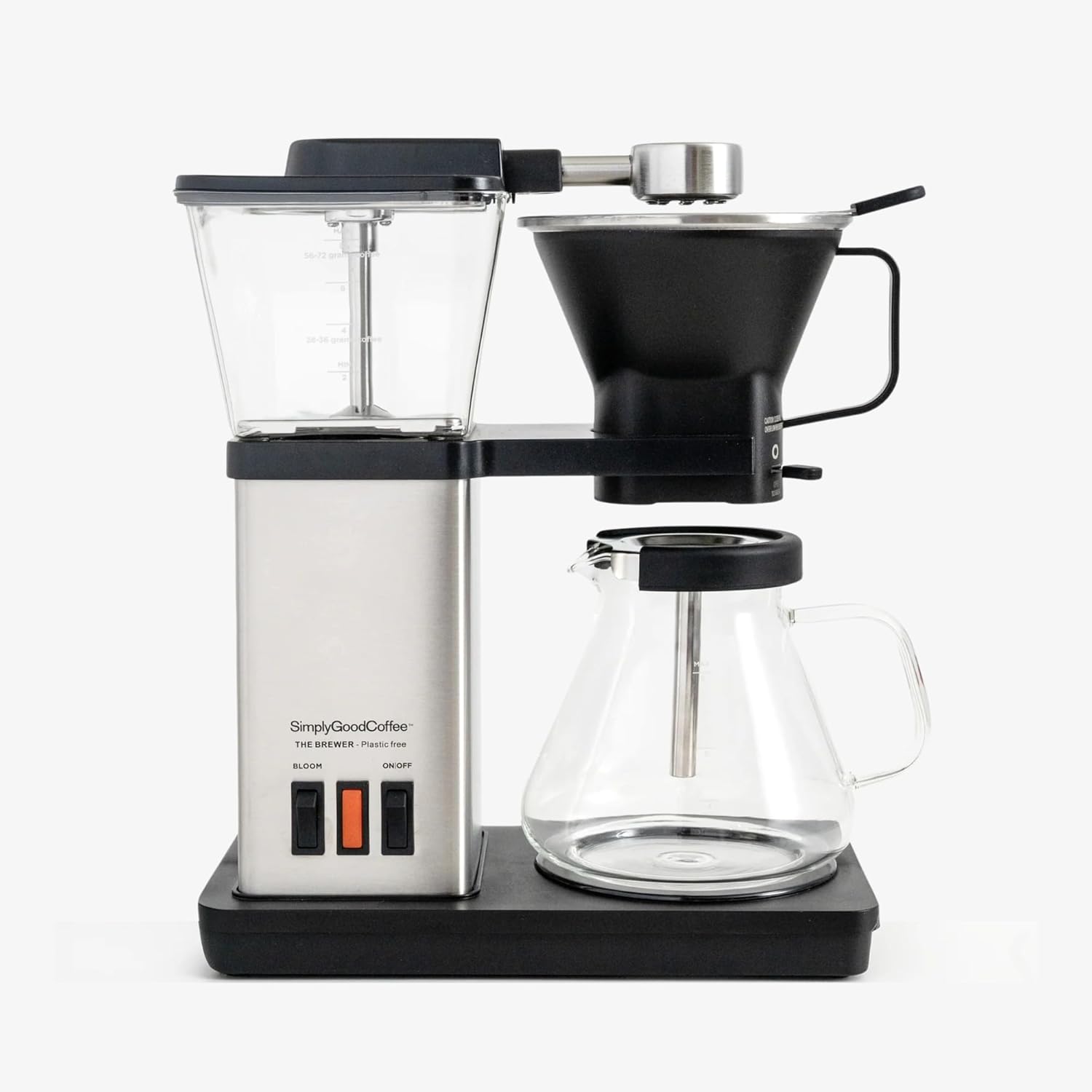
The Simply Good Plastic-Free Brewer measures 13.7 x 7.8 x 14.6 inches, uses a #4 cone, and can brew up to 8 cups of coffee at a time.View Deal
Low plastic, not no plastic
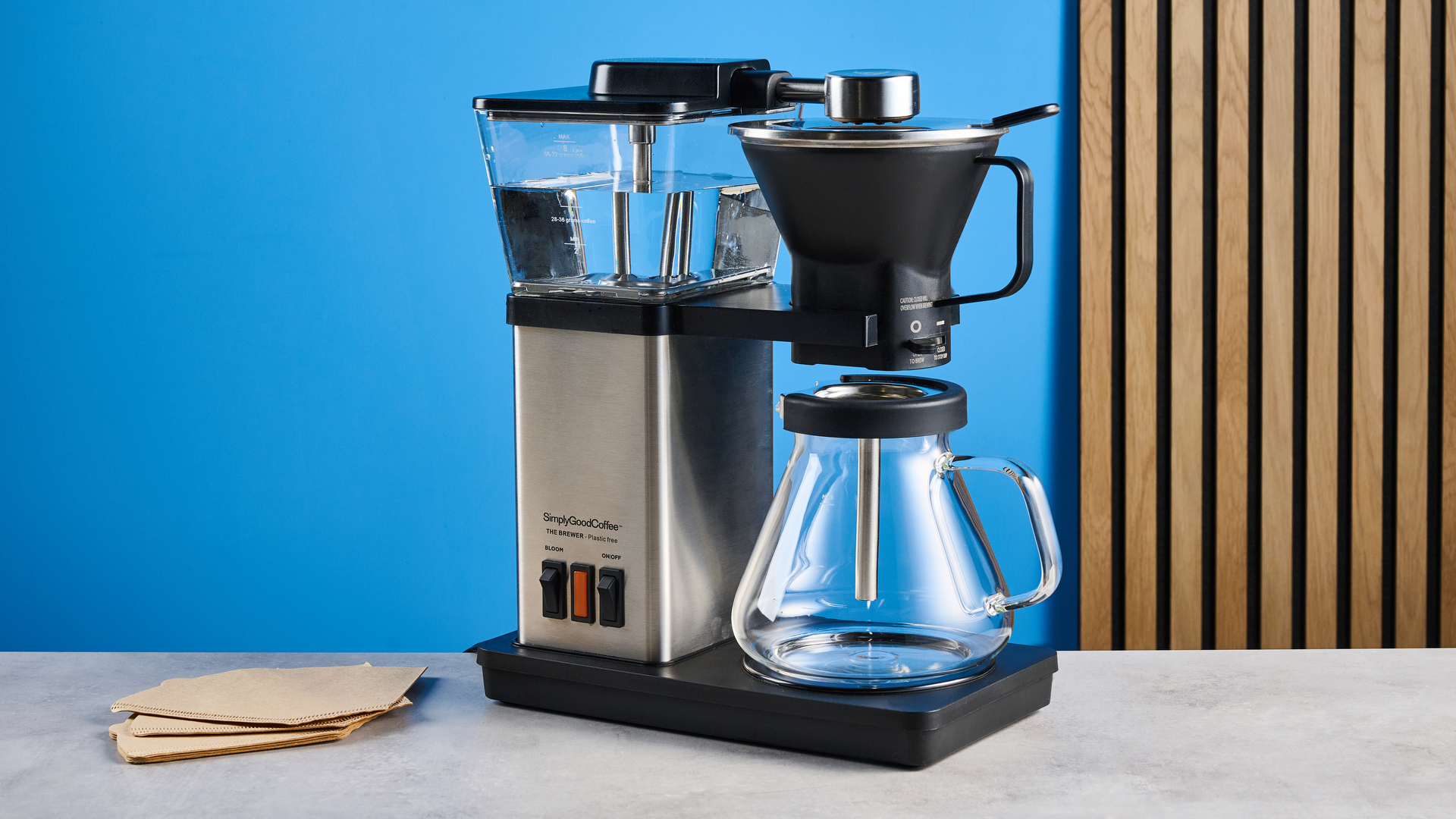
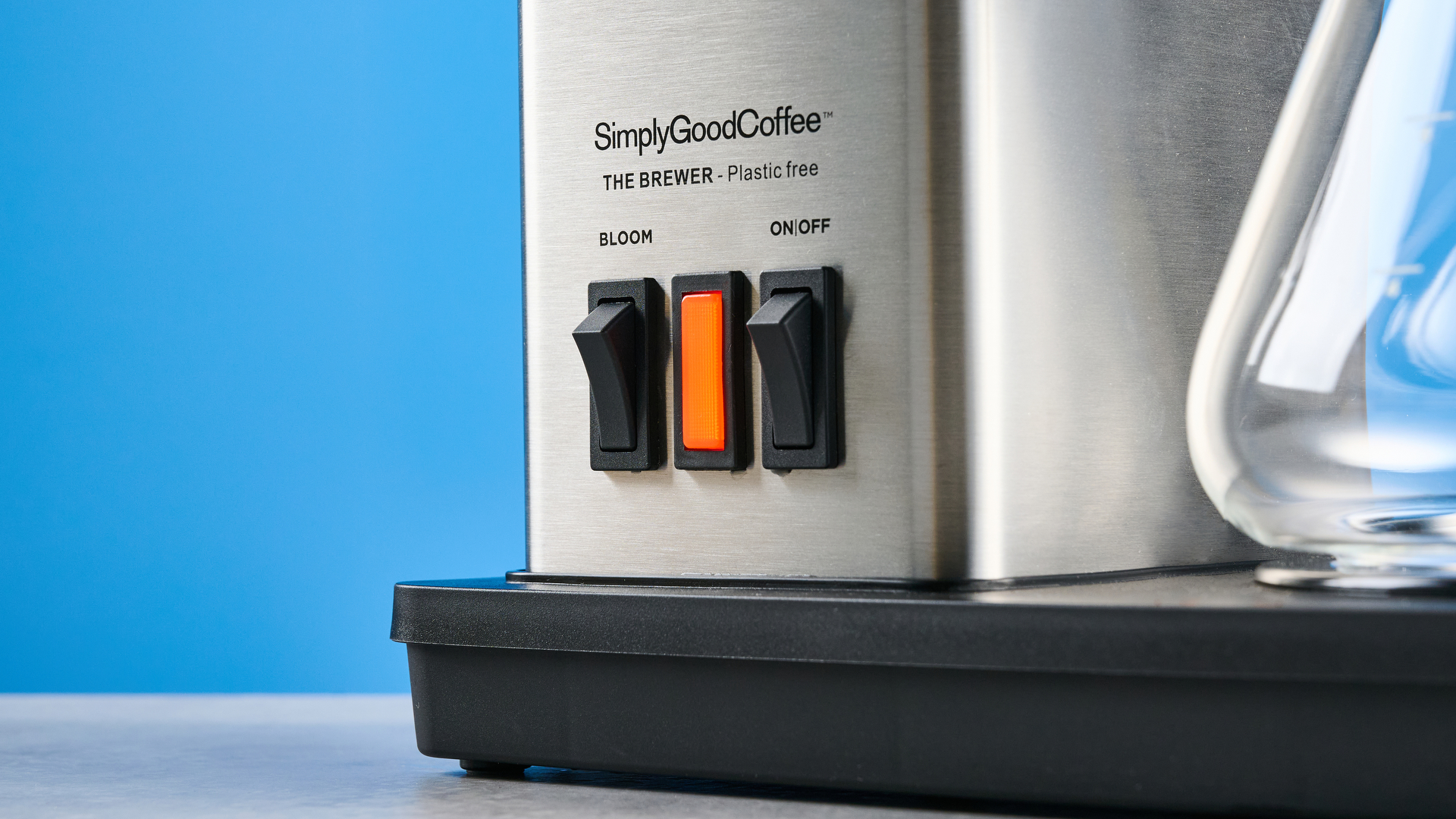
Let's just get this clear: the Simply Good Coffee Plastic-Free brewer is not plastic-free. As I mentioned earlier, it has a plastic coating on the exterior to prevent burns and the internal water lines have medical-grade silicone tubing.
However, no hot water touches plastic at any point during the brewing process. The heating element, water tank, carafe, filter, and destratification tube are all made from stainless steel or glass. Water obviously touches the silicone in the water tubing, but this isn't hot yet. And, it's silicone. It's not plastic in the traditional sense. Do you consider silicone a dangerous plastic, or not?
There are some key differences between the SGC and Moccamaster: the latter has a plastic filter basket, a plastic destratification tube (yes, that's its real name), and a plastic water tank. Let's look at a side-by-side.
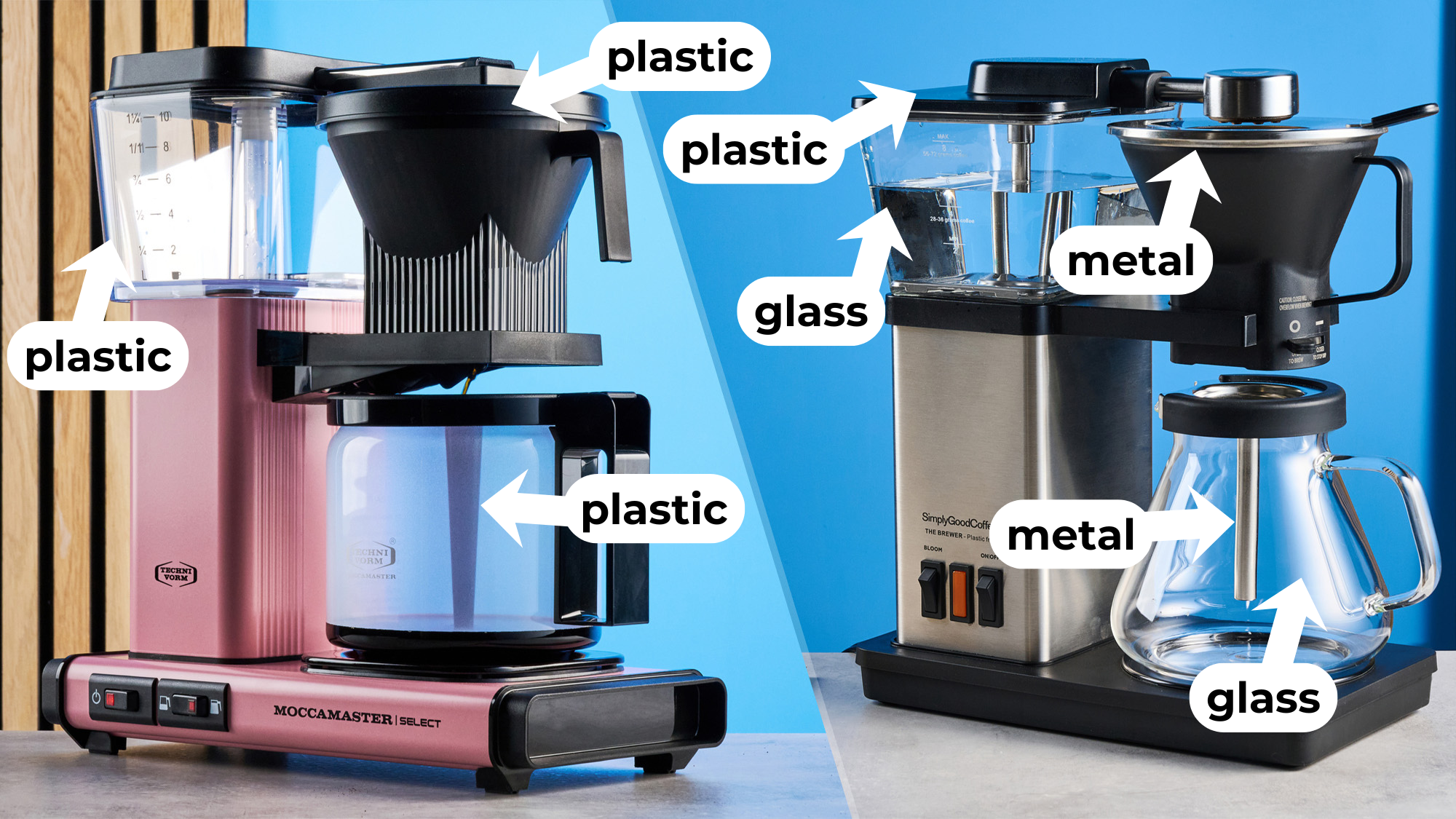
It would be completely inaccurate to claim the Moccamaster leaches plastic into hot water, though. Technivorm is based in the Netherlands, a country with strict plastic laws. Every Moccamaster is handmade in the Netherlands using "virgin plastics in key components". Technivorm uses virgin plastics rather than recycled to "ensure structural consistency, long-term durability, and full traceability of materials." Don't worry — even though BPAs aren't explicitly banned in the U.S., all Moccamaster's plastics are "BPA, BPS, phthalate, and BPF-free."
There's no one correct answer, and I'm not going to pretend there is, or tell you what to believe. You should get whichever machine you feel more comfortable with.
But how does the coffee taste?
The Simply Good Coffee Plastic-Free Brewer makes delicious coffee. In my 4-star review, I wrote, "I never made a bad batch on the Simply Good Coffee Brewer. Every pot tasted clean, fresh, with zero bitterness and a pleasant, well-rounded finish. This coffee tastes just as good as the Moccamaster’s, and I’m sure any Moccamaster transplants will be satisfied with this flavor."
Of course, you can experiment with flavor by adjusting grind size, water-to-coffee ratio, and bloom time. The SGC Plastic-Free Brewer has a bloom button; you can switch it on or off depending on preference.
"I tried every dose from 56g (the minimum for a full pot) to 72g (the maximum for a full pot), and found anywhere between 60g-72g to be perfect," I wrote in my review. Usually, I'm a rigid ratio stickler, but I enjoyed the SCG flavor at pretty much every ratio.
Unfortunately, the Simply Good Coffee Plastic-Free Brewer isn't SCA-accredited yet, but the company claims the Brewer adheres to the SCA's guidelines.
What's your main takeaway?
Would you be willing to try the Simply Good Coffee (Mostly) Plastic-Free Brewer? Or would you rather stick with your old faithful Moccamaster, Ninja, Breville, and the like?
It's worth noting that Simply Good Coffee does not offer a 5-year warranty or lifetime repairs like Technivorm, but "a two-year warranty as standard and a five-year warranty if you enrol in the Coffee Quality Assurance Programme (costs $120…), which gives you free shipping, filters, and cleaning products."
I honestly think I would be happy with either the Moccamaster or the SGC Plastic-Free Brewer. Looks-wise, they're both a bit of me. I love that modern, functional, industrial, yet sleek vibe.
Let me know in the comments which machine you'd rather buy! Be sure to check back next Friday for the next episode of The Coffee Lab brewing on our TikTok, Facebook, Instagram, and YouTube.
More from Tom's Guide
- I tried this ridiculously cheap bean-to-cup espresso machine so you don't have to — and it's a total head-scratcher
- Non-plastic coffee makers are trending — and this low-plastic Ratio model is my favorite for coffee snobs
- Do you need a WDT tool for barista-quality coffee at home? I put the controversial coffee tool to the test
This is a preview from the original publisher. Continue reading at the source:
Read Full Article on tomsguide.com →