

Why is my basil turning yellow? The 3 most common causes and how to fix them
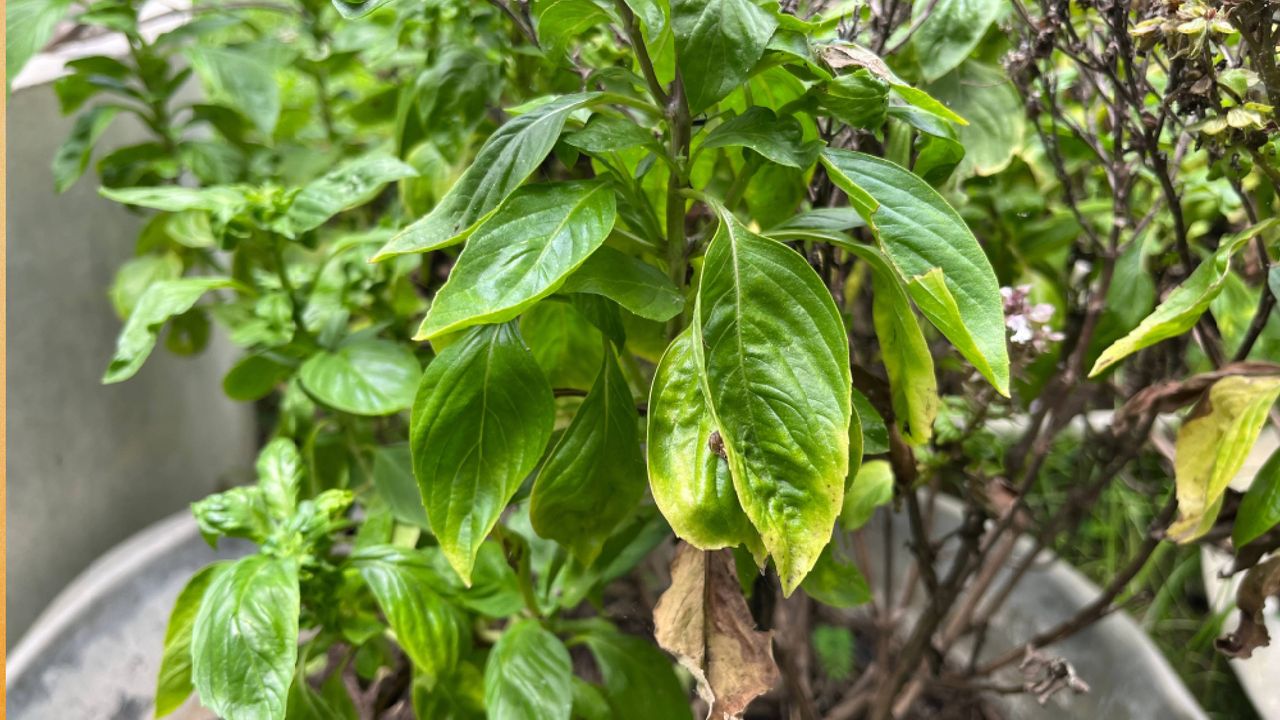
Basil is fussy about conditions. It comes from warm tropical environments where it thrives in heat, bright light, and consistent care. When basil starts turning yellow, it's essentially waving a flag. Something in its environment has shifted.
Once you understand what basil needs, diagnosing the problem becomes straightforward. In most cases, yellowing basil leaves signal one of three fixable issues. Here's how to identify which one and get your plant back to thriving.
1. Your basil is too wet
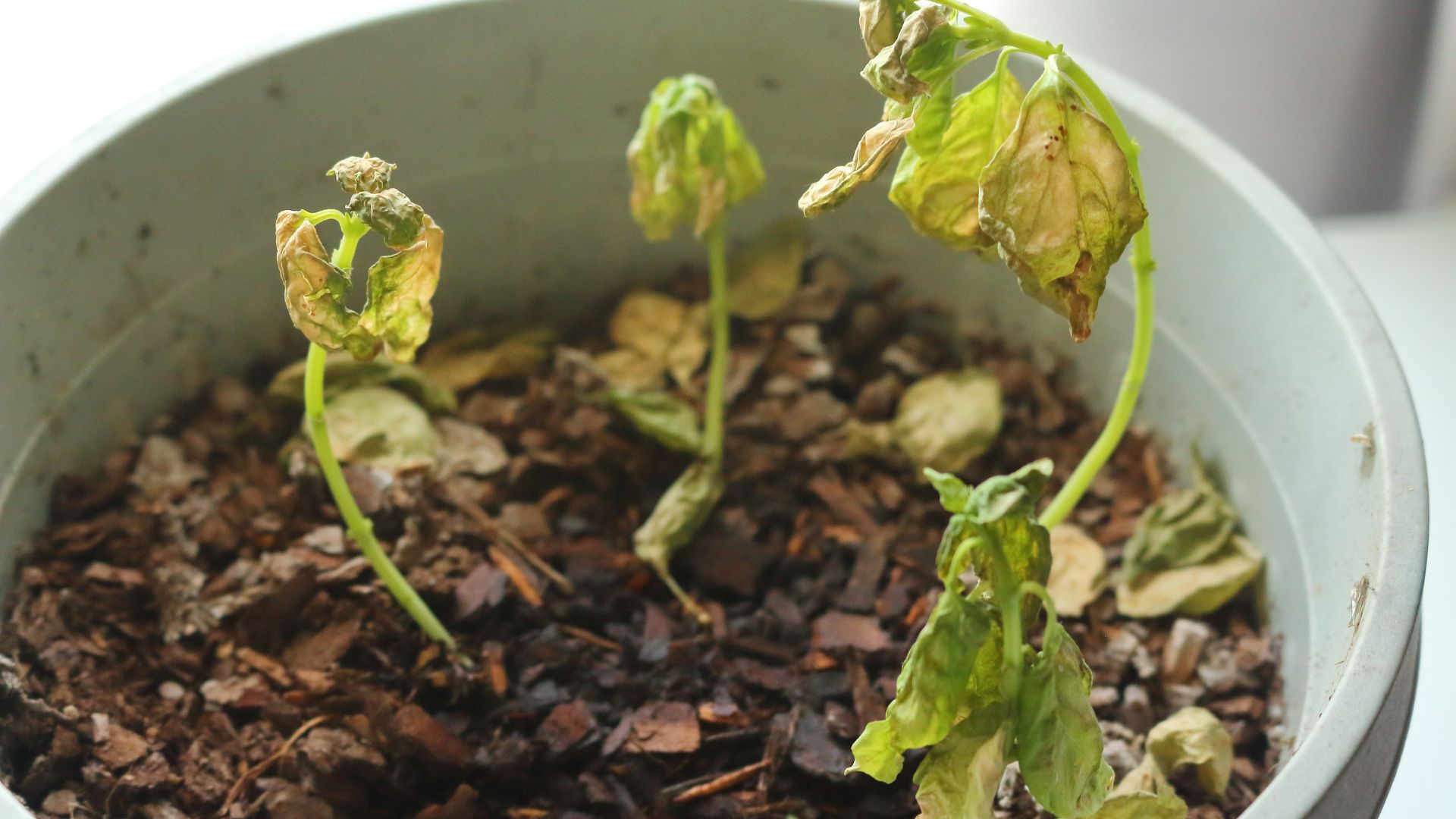
Overwatering causes about 80% of basil yellowing problems. Basil hates sitting in waterlogged soil. When soil stays damp, roots suffocate and can't absorb nutrients or oxygen. The plant essentially drowns from the inside.
Look at the lower leaves first. If they're turning soft and mushy yellow while the soil feels damp or smells stale, you're watering too much. The fix is immediate: stop watering completely. Let the top 1-2 inches of soil dry out entirely before you water again.
Also, make sure your pot has drainage holes. This is non-negotiable for basil.
Going forward, water when soil feels dry to the touch, not on a schedule. Basil would rather be slightly underwatered than oversaturated.
2. It's living in the shadows
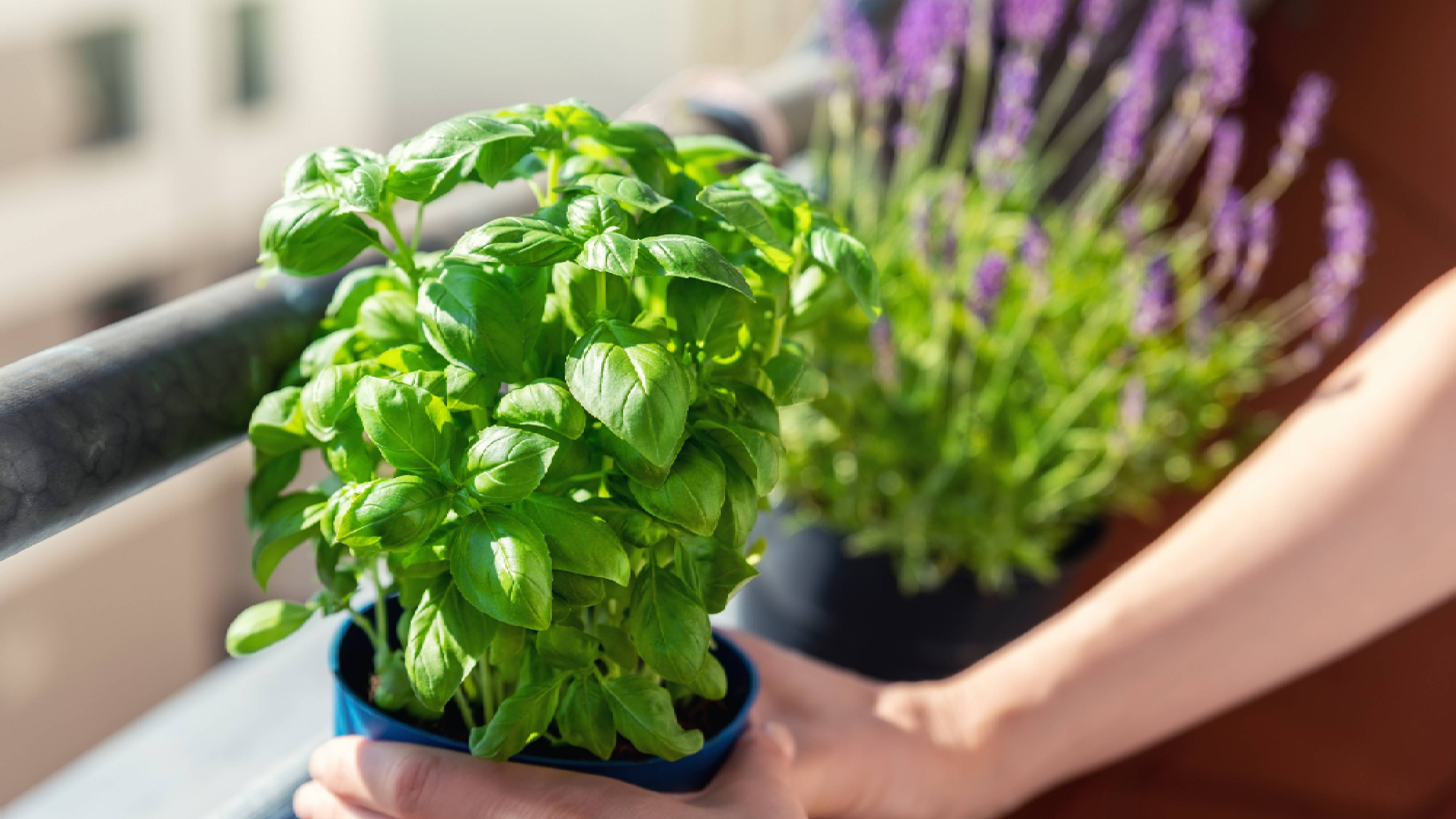
Basil is a sun worshipper that needs 6-8 hours of direct sunlight daily to maintain its green color. Without it, the entire plant looks pale and yellowish. You'll also notice the stems getting long, thin, and stretchy as they reach desperately toward the nearest light source.
Move basil to your absolute sunniest window, preferably south-facing. If indoor light is genuinely limited, a cheap LED grow light makes an enormous difference. Even a few hours under a grow light daily revives pale, yellowing basil remarkably fast.
Outdoor placement works too, if weather allows. Exposure to full sun transforms basil plants within days.
3. The soil has nothing left to give
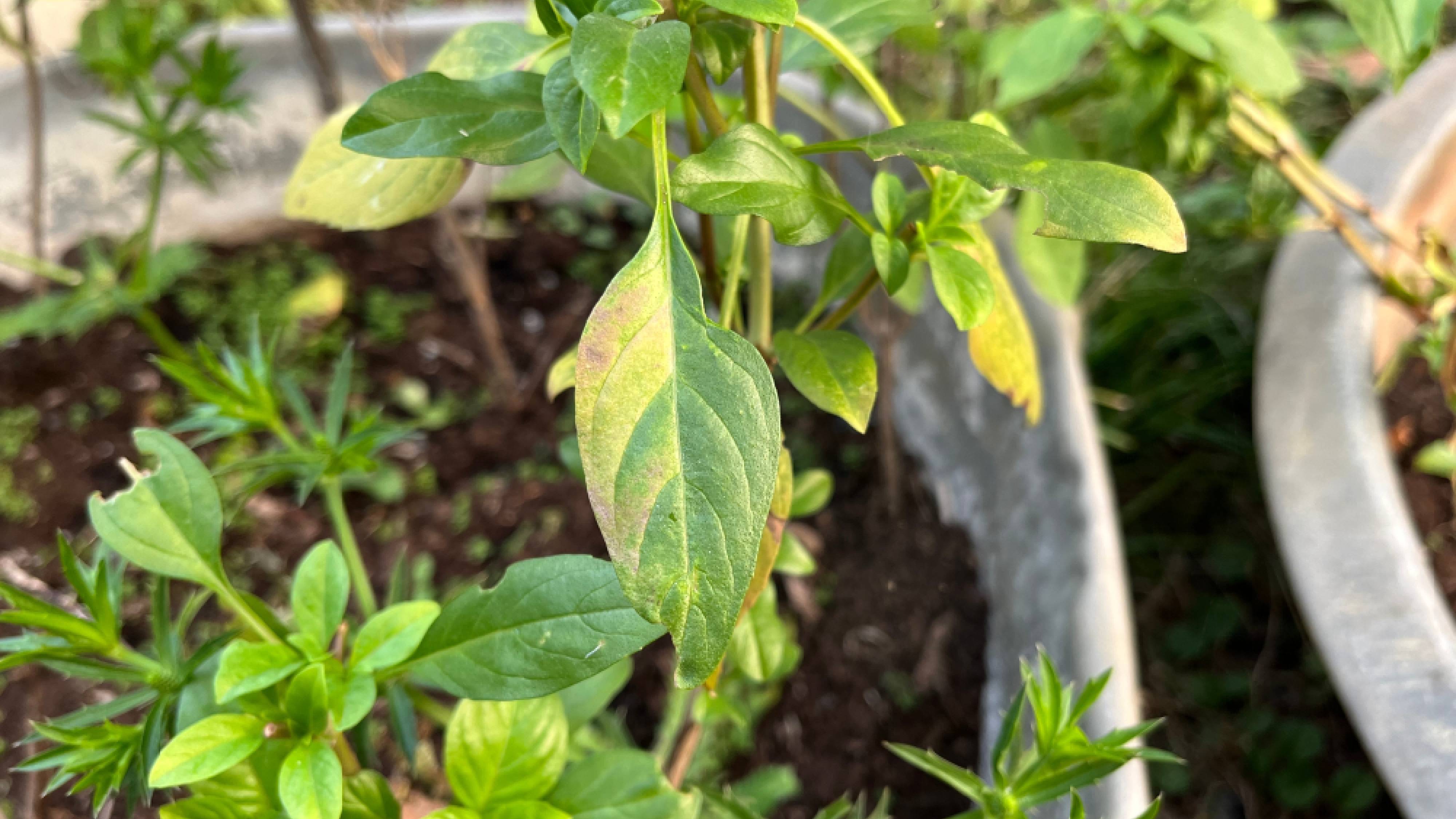
Basil grows aggressively and depletes potting soil nutrients within 4-6 weeks. Nitrogen deficiency is usually the culprit behind yellowing leaves. Unlike the mushy yellow from overwatering, nutrient-starved basil stays firm. The entire plant just looks pale and stunted.
Give it a drink of balanced, water-soluble fertilizer mixed at half strength — tomato or herb fertilizer works perfectly. One feeding usually restores color within a week or two. If you're using basil heavily for cooking, consider fertilizing every 2-3 weeks to keep nutrients available.
More from Tom's Guide
This is a preview from the original publisher. Continue reading at the source:
Read Full Article on tomsguide.com →