

I did the Frankenstein walk to strengthen my hip flexors and build core stability: here’s what happened after a week
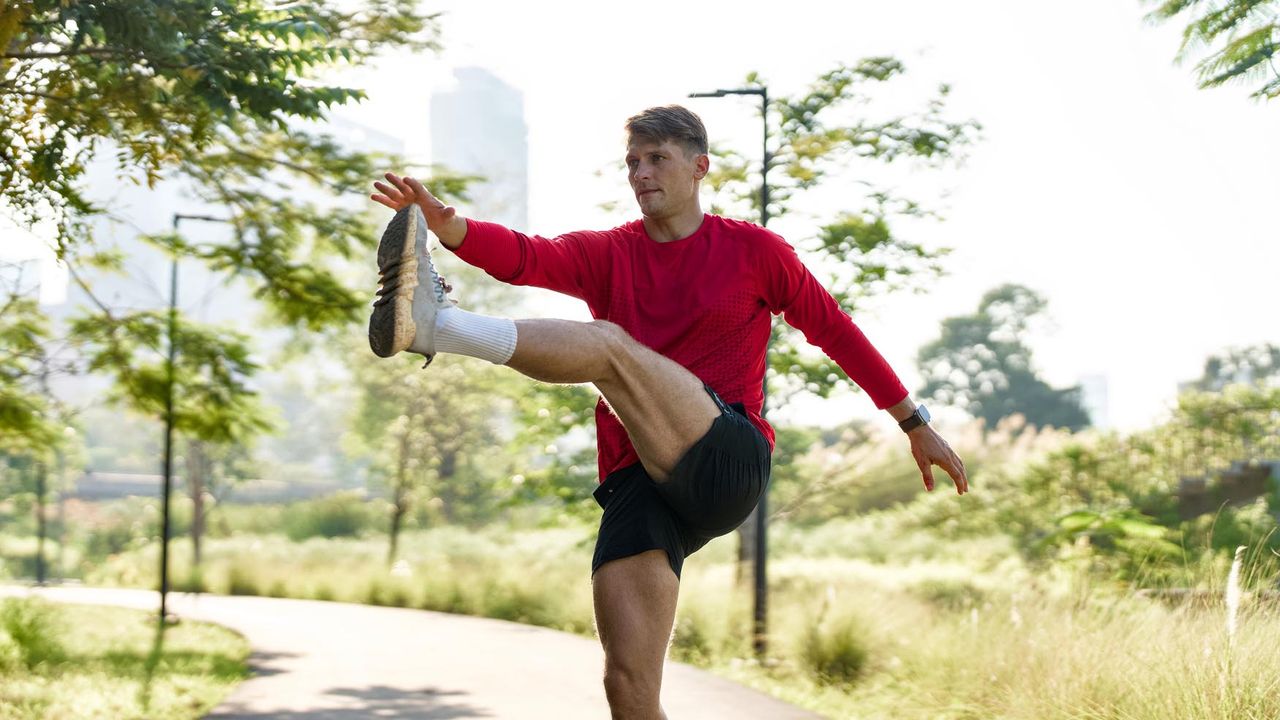
As I’ve grown older, I’ve learned a few things. I probably should have learned a lot of things, but I’ll take what I can get. One of them is that stretching is increasingly important as the years gallop by and disappear over the hill, never to be seen again. This is something I should have been aware of a long time ago, but, again, I’ll take what I can get.
So I now stretch before and after exercise, and I also stretch in the mornings (yawning excessively and extending the arms out to the sides like a cartoon bear emerging from hibernation does not count, by the way). I do a range of stretches but I had never tried the Frankenstein walk, which is a dynamic stretch, meaning it’s designed to improve range of motion and act as a warm-up move. And now that I have… well, I plan to keep walking this way.
What is it?
The Frankenstein walk is one of the most straightforward moves I have ever done for Tom’s Guide. It works the hamstrings, quads, and hips, and also helps you loosen up before exercise. Tight hamstrings are a major factor in limiting performance in daily activities, as well as sport, and can lead to back pain, too, as can tight hip flexors.
The exercise is also known, more prosaically, as the toe-touch walk and while infinitely less catchy, that name is also far more accurate. Victor Frankenstein had, from all indications, a perfectly normal human walk (though as played by Oscar Isaac in the recent Guillermo del Toro adaptation, he was inclined to swagger like a rock star), and his misbegotten creation (who was, of course, not called Frankenstein) has never walked in the highly exaggerated, hugely inefficient manner this move suggests. So, not only is it named after the wrong guy, it just didn’t happen, at least not in the film versions I’ve seen (and Mary Shelley certainly doesn’t go on about it). That said, it’s a deceptively effective exercise.
If you have recently had hip or lower back problems, or you are recovering from injury, talk with a medical professional before attempting this move.
How do I do it?
- Stand tall, arms straight in front of you, palms down.
- Begin to walk forward, swinging one leg high to create a 90-degree angle with your body. Your foot should be close to the hand on the same side.
- With the next step, do the same thing with the other leg.
- Continue for 20 steps, changing direction if space is limited. Repeat two or three times.
I did the Frankenstein walk for a week and this is what I learned
With most of these moves, I begin with decent-to-abysmal form and get better over the week. This one I could do from day one. That did severely limit the learning experience, so I focused on adding to my steps and using the move as a warm-up or even a respite from sitting at my desk — for which it was excellent. However, I work from home, so please think hard before you try this in an office, where other people will certainly see you and may call security. Just go to a park.
Although there is not much technique involved, there are a couple of things to watch for. First, don’t overdo it. Only raise your leg as high as you comfortably can — you don’t need to kick your own hand. If you are flexible enough to do so, you still don’t have to inflict damage on yourself. Also, don’t arch your back or lean forward when doing the exercise. Maintain a straight back throughout.
This one’s a keeper
I liked this move from the start, and not just because I could do it with relative ease. I enjoyed it because I immediately felt its benefits. After a long period at my desk, it quickly activated and stretched my quads, hamstrings and glutes, and eased lower back tightness (it’s all connected, folks). And it’s also a decent cardio workout. After 50 high steps on day one, I was breathing hard. This one gets the heart pumping and the blood flowing, which also made it very useful as a warm-up before a run.
In the days that followed, I simply upped my steps, noticing it became easier to raise my leg higher. After each effort, I felt invigorated, which was the dynamic aspect of the move doing its thing. Such stretching before exercise has been shown to increase hamstring flexibility and reduce stiffness. It can also lower the risk of joint strain, pain and muscle damage.
By the end of the week, I had stopped counting steps. I merely kept at it until I began to feel a little foolish. I did the move indoors, turning when I had to, but I feel you can do this one on the spot, without going forward at all. I also tried doing it without raising my arms, and it can be done, though raised arms help with balance and give your legs something to aim for, or aim past. After a few days, I was able to raise my legs higher than my hands, which was a great and pleasant surprise. Some coaches suggest that, once you are comfortable with the basic move, you can raise your arm to touch your opposite foot and extend your other arm behind you. I did not feel this added much, but you may get a kick out of it.
This is a move I can endorse without hesitation or caveat. It’s fairly easy to do it well; it works, and at no point did I feel I was about to be chased by villagers carrying torches and pitchforks, which is always a bonus during exercise. I confess to occasionally thinking I was in a military parade in one of those places where everyone has to look up at a smiling dictator, but I wasn’t wearing a huge hat, so the moment always passed. Do try this one, but take it one step at a time.
More from Tom's Guide
- I teach people how to be more mobile: 3 low-impact back and shoulder moves that build stability and strength after 40
- According to a personal trainer, this exercise is 100 times more effective than crunches. I tried it and was humbled
- I teach people over 50 to be mobile: 3 low-impact moves that build more stability than a 30-minute walk
This is a preview from the original publisher. Continue reading at the source:
Read Full Article on tomsguide.com →