

Forget passwords: ExpressVPN now lets you sign in with your face or fingerprint
- ExpressVPN has launched passkey sign-in for passwordless logins
- Passkeys are more resistant to phishing, but passwords remain a backup
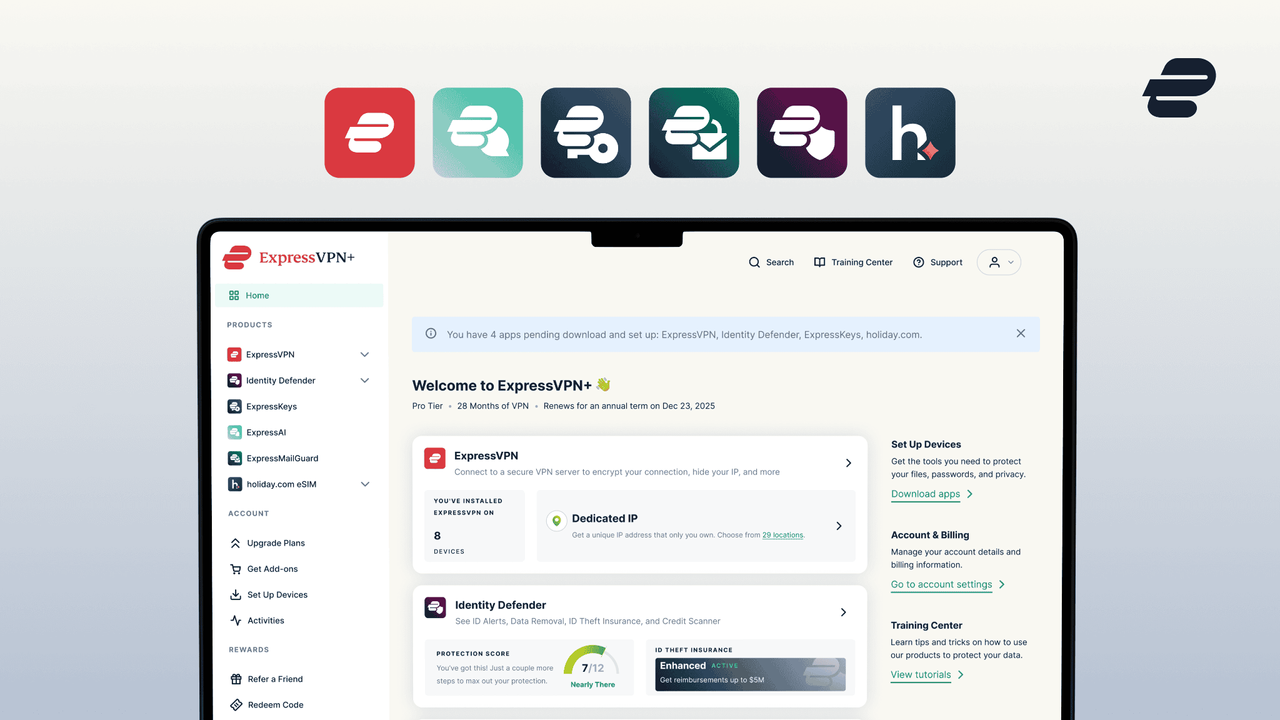
- The feature arrives as part of a redesigned ExpressVPN+ dashboard
One of the best VPN providers is retiring the password, at least as a requirement.
ExpressVPN has added passkey sign-in, giving users a way to get into their account without typing anything at all.
Instead of a password, you sign in using the screen lock already on your device, such as a fingerprint or face scan. That means nothing extra to remember and nothing to key in each time.
The change was announced on Tuesday (July 21) and is part of a wider redesign of the ExpressVPN+ dashboard, which the company is turning into a single home for your entire subscription.
ExpressVPN: Starting from $2.49 per month
ExpressVPN is the easiest VPN to use on our list, making it a great option for anyone slightly less tech-savvy. It’s also one of the most secure VPN we’ve tested, with good features to keep you safe online. Subscriptions start at $2.49 per month on the two-year plan, which puts it on a par with NordVPN. As with most VPNs, there’s a 30-day money-back guarantee.View Deal
What is new in ExpressVPN+
ExpressVPN+ now supports passkeys, so you can reach your account without entering a password. The company notes this can make life easier when you are setting the VPN up on a new device.
The redesigned dashboard sits behind that login. Rather than hopping between separate apps and account pages, you get one view of what is protecting you, which products you have set up, and anything that needs attention.
Depending on your ExpressVPN plans and regions, ExpressVPN says it can pull in insights from tools like ExpressKeys and Identity Defender, and you can also buy and manage holiday.com travel eSIMs from the same place.
How passkeys work, and why they are safer
A passkey swaps your password for a pair of cryptographic keys. The public key lives on the service's server while the private key stays locked on your device, and no shared secret ever travels across the network for an attacker to intercept.
That design is what makes passkeys resistant to phishing: there is no password to trick you out of, and the credential only works on the genuine ExpressVPN sign-in page.
It is an approach Apple, Google, and Microsoft have all backed, and one ExpressVPN has already brought to its ExpressKeys password manager.
To enable one, sign in to your ExpressVPN account, select your profile in the top-right corner, choose Account & Billing, and follow the prompts to add a passkey.
If you use ExpressKeys, you can save the passkey there alongside your other logins. And if you would rather stick with what you know, your password will keep working as another way in.
This is a preview from the original publisher. Continue reading at the source:
Read Full Article on techradar.com →