

Forget sit-ups and crunches: I did the gymnast plank for a week, and my core still hasn’t forgiven me
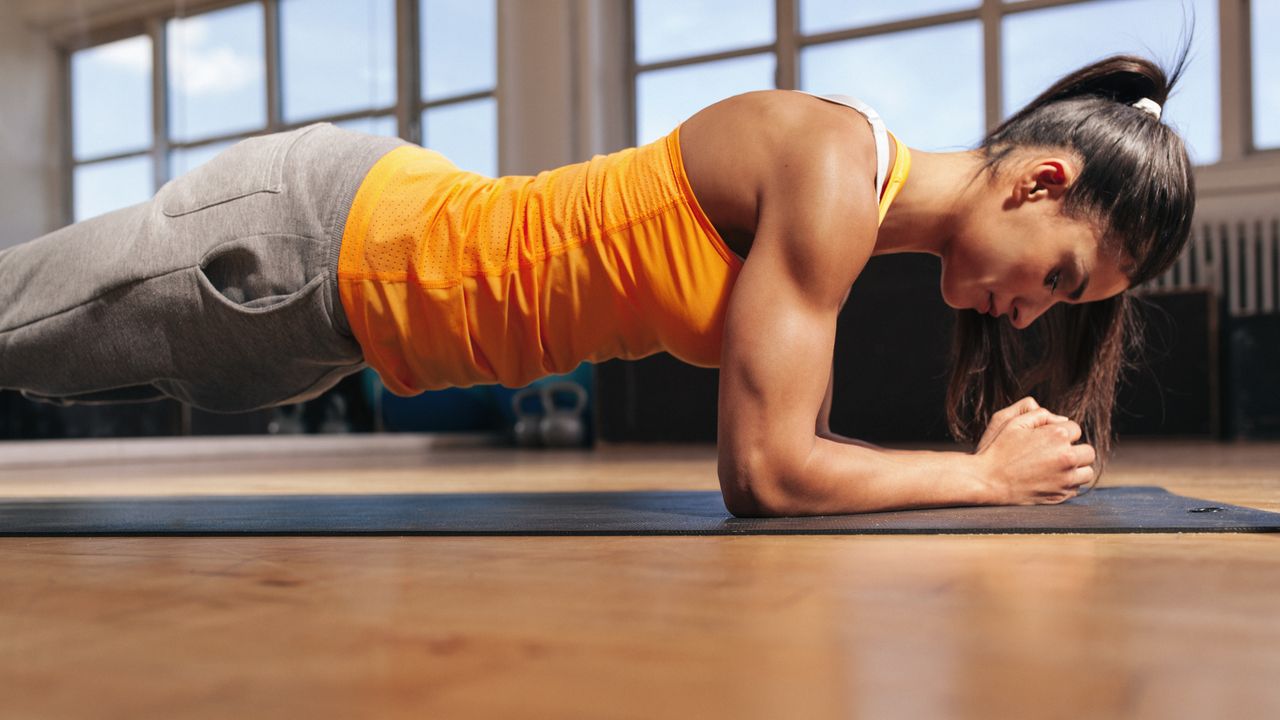
Forget everything you thought you knew about the plank, as the gymnast plank is about to change it. This killer variation blasts your core and posterior chain (the group of muscles that run along the back of your body) and is a serious challenge for anyone looking to up the ante in their ab workouts.
As always, I decided to practice what I preach, and I added the move to my pre-run warm-up for a week. My core still hasn’t forgiven me, and while I’m definitely no gymnast, read on to find out why I recommend adding this move to your workout routine.
As a gentle reminder, if you’re a complete beginner, you’re pregnant or postpartum, or you’re recovering from a specific injury, this might not be the right move for you and your body. Always check in with a qualified professional before trying something new.
What is the gymnast plank?
In a traditional plank, you’ll focus on keeping your spine completely flat, but a gymnast plank forces you to do the opposite. In this move, you’ll actively round your upper back and tuck your pelvis while balancing on your elbows and pointed feet. It’s a challenging progression of the forearm plank and has several benefits.
You won’t need any additional equipment for this exercise, just your bodyweight, but using one of the best yoga mats can help keep things comfortable.
Here’s how to do a gymnast plank with good form:
- Start in a standard forearm plank position, with your forearms shoulder-width apart.
- From here, squeeze your glutes and scoop your abs to tuck your tailbone under. Your lower back should flatten out and your pelvis should tilt.
- Drive your elbows into the floor and think about rounding your upper back like a cat — this is a move called scapular protraction.
- Keep your legs closed and your toes pointed. Extend your knees completely.
- Keep squeezing your core, bracing as hard as you can.
- Hold the move for 3 to 4 sets of 15-30 seconds rather than trying to hold this exercise as long as you would a standard bodyweight plank.
Your body should stay in this hollow position for the entire hold. If you notice your hips dropping to the floor or your neck and shoulders slouching, stop and reset. This is an advanced move, so if you’re a beginner, stick with a traditional forearm plank to build strength in your abs first.
What are the benefits?
This exercise is tough, and you’ll probably need to work up to holding it for the full 30 seconds. That said, when you do, you’ll be getting a fantastic ab workout. As well as your deep transverse abdominis muscles, which have to fire to keep you stable in this move, the ‘scooping’ element of the gymnast plank will also blast the outer ‘rectus abdominis’ or six-pack muscles. This exceeds the muscular tension generated by a regular plank.
You’ll also be building scapular stability and shoulder strength in this move, which can translate to other exercises, whether you’re a gymnast or not. To hold the position, you’ll have to aggressively push the floor away and round your upper back. Holding this position strengthens your shoulders, building a great foundation for exercises like push-ups and overhead lifts.
Finally, if you spend a lot of time sitting down, you’ll probably have tight hip flexors. As well as increasing your risk of injury, tight hip flexors can pull the pelvis into an anterior tilt, where the lower back arches. This exercise requires you to do the exact opposite and teaches you to engage the glutes and lower abs together to pull the pelvis back into a neutral position.
I added the gymnast plank to my routine for a week — here’s what I learned
I haven’t practiced gymnastics since gym class in high school, but I’m a marathon runner who spends most of her week sitting down behind a desk, so if I didn’t have tight hip flexors, it would be a miracle. I really struggled getting to grips with this move at first, and had to really focus on scooping my abs and squeezing my glutes to correct the desk hunch posture many of us have adopted.
Another noticeable difference with this plank variation is holding on pointed toes. Again, I don’t worry too much about my toes in workouts, as I’m not a gymnast, but I found the pressure on my feet was a lot. This did ease over the course of the week.
After seven days, I was able to hold for a full 30 seconds, but the core shake was intense and this is one challenge I’m glad is over. I actually enjoyed the stretch in my shoulders and this move was a real eye-opener at how much sitting down all day is affecting my body. I’ll be keeping it in my ab workouts, and I promise I’ll never moan about a standard forearm plank ever again. Be warned, this one is tricky!
More from Tom's Guide
- I teach people how to be more mobile: 3 low-impact back and shoulder moves that build stability and strength after 40
- According to a personal trainer, this exercise is 100 times more effective than crunches. I tried it and was humbled
- I teach people over 50 to be mobile: 3 low-impact moves that build more stability than a 30-minute walk
This is a preview from the original publisher. Continue reading at the source:
Read Full Article on tomsguide.com →