I turned YouTube into an AI bootcamp with NotebookLM — here's my workflow
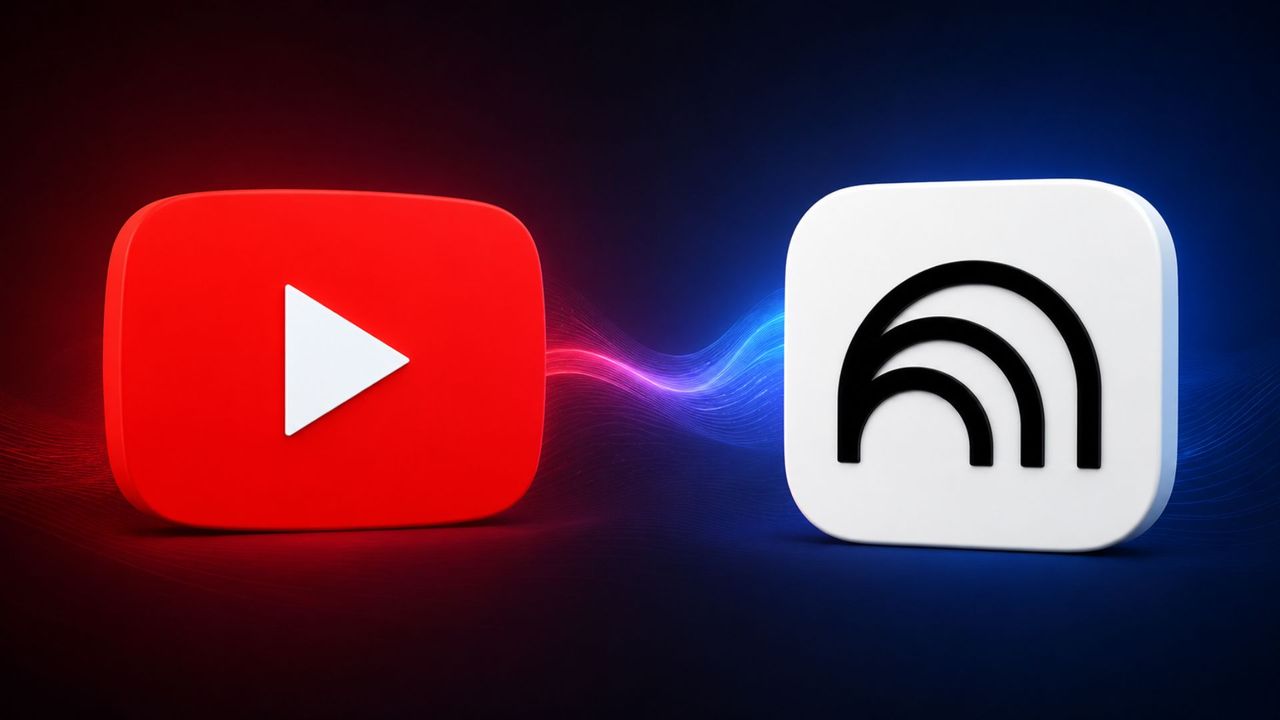
Up until a few weeks ago I used YouTube the way most people do. I'd save dozens of interesting videos to my Watch Later playlist, promise myself I'd watch them someday and then, well, I'd never quite get around to it.
When I did finally press play, I'd often skip ahead or skip the video completely rather than devoting an entire 30 or 40 minutes watching a tutorial. And attempting to remember one useful tip, was a game in itself. I'd always go back and try to find the exact moment where something special was mentioned in the video.
NotebookLM completely changed that. Now, instead of watching videos from beginning to end, I now upload them into Google's NotebookLM and transform the videos into an interactive course that I can question, compare and revisit whenever I need it.
It's quickly become one of my favorite ways to learn and I've even gotten my kids involved with it so they continue to learn over the summer.
Why NotebookLM works so well with YouTube
Keep in mind that NotebookLM relies on YouTube's auto-generated transcripts, so it works best for talking-head videos, lectures,and tutorials rather than highly visual, text-free edits. You can easily check if a video has a transcript by simply clicking the "Show Transcript" button. That said, if you don't see it, there probably isn't one but you don't need to stop there. You can always turn on Gemini Live to take notes and record the video to later upload into NotebookLM.
Getting videos into NotebookLM is surprisingly easy. Create a new notebook, click Add source, choose Website, then paste the URL of any YouTube video. NotebookLM automatically pulls in the video's transcript (when one is available), making it searchable alongside any other sources you add.
Once they're inside a notebook, they become searchable knowledge, so instead of hunting through timestamps, I simply ask.
That means you can ask questions like:
- What are the three biggest takeaways?
- Explain this as if I'm a beginner.
- Which parts disagree with another video?
- What tools does this creator recommend?
- Give me a checklist based on everything covered.
My AI bootcamp workflow
1. I collect videos instead of watching them immediately.
Whenever I find a great video, I simply save it to a playlist until I have a topic worth exploring. This could be a video about an AI workflow, AI tutorial, Claude Skills, Local AI, MCP servers or anything else I find interesting.
My husband has a lawn care business, so he saves instructional videos for topics like pruning, edging, tools and tricks. Similarly, I save videos for my kids on topics they like.
Once I have several videos covering the same subject, I move to NotebookLM.
2. I upload several videos to NotebookLM
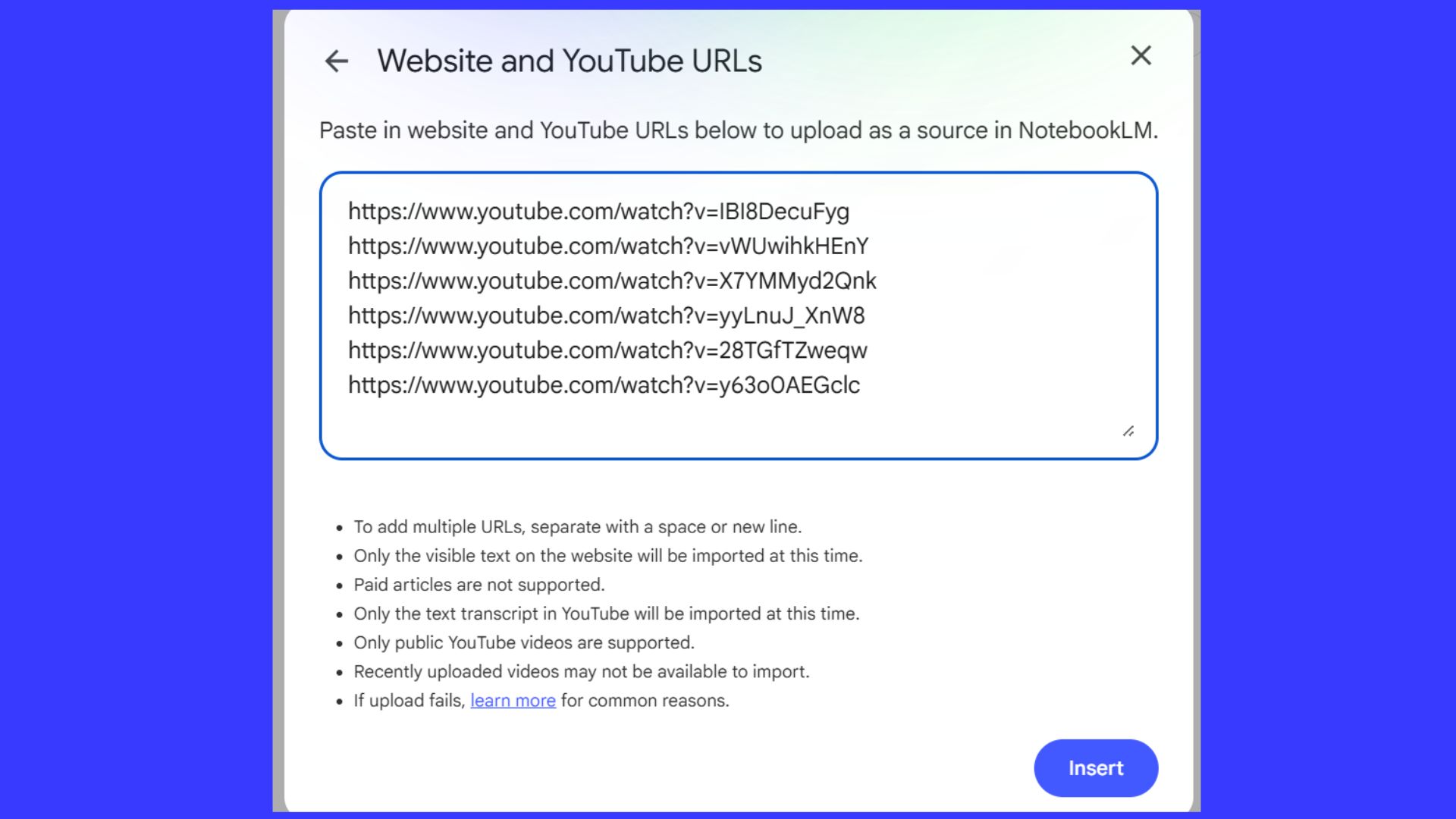
This is where the magic starts. Instead of asking NotebookLM to summarize one creator, I feed it multiple perspectives on the same topic. The way I see it, five creators explaining AI agents is much more valuable than one. That way, NotebookLM starts finding patterns and interesting perspectives between them.
It identifies ideas that everyone agrees on and points out where opinions differ. That gives me a much broader understanding than simply watching videos one after another.
3. I ask questions instead of watching passively
Rather than sitting through hours of content, I ask questions to NotebookLM the way I might actually discuss the topic with the person in the video. Best of all, I get answers right away so it's a lot like talking directly to a private tutor. Questions I might ask are:
- What concepts appear in every video?
- What advice is unique?
- Which workflow seems easiest for beginners?
- What mistakes should I avoid?
- If I only had one hour, what should I learn first?
4. I generate a study guide
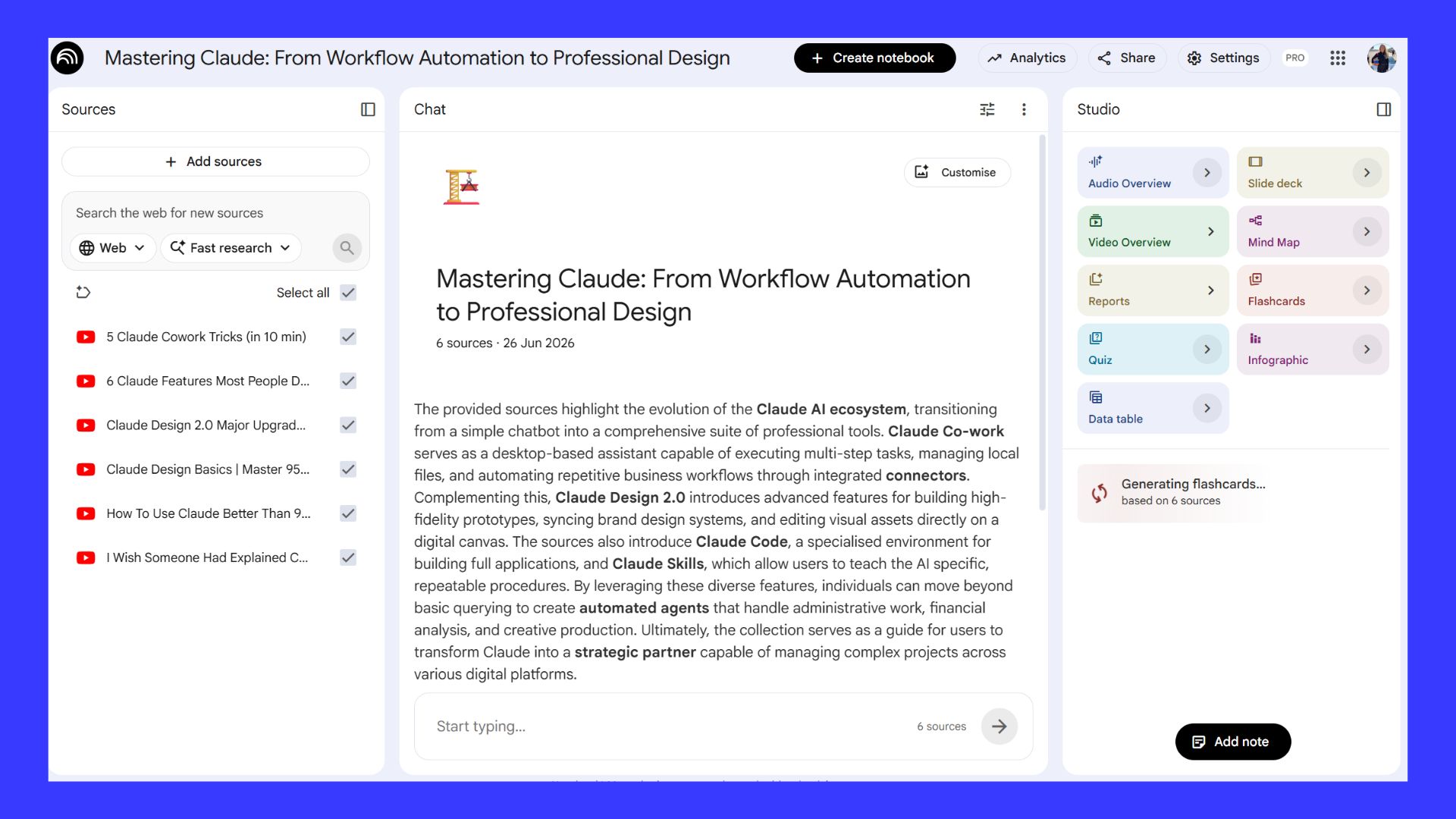
Once I've explored the material, I need something practical instead of relying on memory. That's when I ask NotebookLM to create:
- a beginner roadmap
- a glossary
- flashcards
- a checklist
- a step-by-step learning plan
5. I create an Audio Overview
One of my favorite NotebookLM features is Audio Overviews. Instead of reading pages of notes, NotebookLM creates a conversational audio discussion based on the sources I've uploaded.
I'll often listen while driving, running or making dinner. It's an easy way to reinforce what I've already learned without opening my laptop again.
A few final thoughts
This method absolutely beats binge-watching YouTube. And while there's nothing wrong with watching great creators, after a while, I realized I wasn't building knowledge, I was just consuming content. YouTube is simply the source material. From there, NotebookLM organizes it, compares it, quizzes me on it and turns hours of videos into something that feels much closer to a personalized AI course. For anyone trying to keep up with how quickly AI is changing, it's one of the smartest free workflows I've found.
Give it a try and let me know what you think. Share your thoughts in the comments.
Follow Amanda Caswell and stay ahead of the AI curve
More from Tom's Guide
This is a preview from the original publisher. Continue reading at the source:
Read Full Article on tomsguide.com →